Low water pressure can come from something as simple as a clogged shower head or something more significant, such as a plumbing leak, restricted pipe, valve problem, or issue with the water supply. The first step is determining whether the problem affects one fixture, your hot or cold water, or your entire Huntsville home.
What Is Considered Low Water Pressure?
Water pressure describes the force that moves water through your home’s plumbing system and is typically measured in pounds per square inch (psi). However, the number on a pressure gauge is only part of the picture.
If showers have become noticeably weaker, faucets take longer to fill a sink, or multiple fixtures lose flow when used at the same time, there may be a pressure or flow problem worth investigating.
It is also important to distinguish between water pressure and water flow. Pressure is the force pushing water through the system, while flow is the amount of water that reaches a fixture over a given period. A restriction at a faucet or shower head, for example, can create weak flow even when the home’s overall water pressure is normal.
Before trying to fix the problem, determine where it is happening.
- One faucet or shower: The problem is more likely related to that fixture, its aerator, cartridge, valve, or supply line.
- Hot water only: The issue may involve the water heater or hot-water plumbing.
- Multiple fixtures or the entire house: The problem could involve the main water supply, a valve, pressure regulator, leak, or restriction within the plumbing system.
- Sudden pressure loss: A sudden change deserves attention, particularly if you also notice signs of a leak or other plumbing problem.
What Causes Low Water Pressure in a House?
There is no single cause of low water pressure. The location and timing of the problem provide some of the best clues about what is happening.
Here are some of the most common possibilities.
1. Clogged Faucet Aerators or Shower heads
If only one faucet or shower has weak flow, start with the fixture itself.
Mineral deposits, sediment, and debris can gradually collect inside faucet aerators and shower heads, restricting the amount of water that passes through them.
Try another fixture nearby. If it has normal flow, the problem is probably localized rather than affecting your entire plumbing system.
Removing and cleaning an aerator or shower head according to the manufacturer’s instructions may resolve a minor buildup problem. If cleaning doesn’t help, the restriction could be farther inside the fixture, valve, or supply line.
2. A Partially Closed Valve
Water has to pass through several valves before reaching your fixtures. If a main shutoff or another supply valve isn’t fully open, it can restrict water flow.
This is particularly worth checking if the pressure changed after plumbing work, maintenance, or a recent shutoff.
Homeowners can visually check accessible valves, but avoid forcing a valve that is stuck, heavily corroded, or difficult to turn. Damaging an older valve can turn a pressure problem into a leak.
3. A Plumbing Leak
A leak can reduce the amount of water reaching fixtures and may sometimes contribute to a noticeable change in pressure or flow.
Other warning signs can include:
- An unexplained increase in water usage
- Damp spots on walls, ceilings, or floors
- Water stains or discoloration
- The sound of running water when fixtures are off
- Puddles or unusually wet areas
- A sudden change in water pressure
Not every leak causes obvious low pressure, and not every pressure problem means you have a leak. But if your water pressure changes suddenly and you notice other signs of water loss, it is worth having the plumbing inspected.
4. A Pressure Regulator Problem
Some homes have a pressure-reducing valve, often called a PRV or pressure regulator, that helps control the pressure entering the home’s plumbing system.
If the regulator is failing or improperly adjusted, homeowners may notice pressure that is unusually weak, strong, or inconsistent throughout the house.
Because pressure-regulating equipment affects the broader plumbing system, diagnosis and adjustment are generally best handled by a qualified plumber.
5. Corroded, Damaged, or Restricted Pipes
If water pressure has gradually worsened over time and multiple fixtures are affected, the issue may be within the plumbing itself.
Older or damaged piping can develop restrictions that reduce water flow. The exact cause depends on the pipe material, age of the system, water characteristics, and condition of the plumbing.
A plumber can determine whether the problem is isolated to one section or points to a broader issue with the home’s piping.
6. Mineral or Sediment Buildup
Minerals and sediment can accumulate in aerators, shower heads, valves, fixtures, and certain plumbing components over time.
When buildup occurs at one fixture, cleaning or replacing that component may restore normal flow. Repeated restrictions at multiple locations may require a closer look at the plumbing system and water conditions in the home.
7. A Water-Supply Issue
Sometimes the problem isn’t inside your house.
Work on a water main, changes in the local supply system, or another upstream issue can temporarily affect water pressure. If pressure suddenly drops throughout your entire home, check whether neighbors are experiencing the same problem and look for notices from your local water provider.
If nearby homes have normal pressure but yours does not, the issue is more likely somewhere between the supply and your fixtures.
Why Did My Water Pressure Suddenly Drop?
A sudden pressure drop is different from pressure that has slowly worsened over months or years.
If water pressure changes abruptly, possible causes include a valve that has been moved, a plumbing leak, a problem with pressure-regulating equipment, a supply interruption, or another failure within the plumbing system.
Start by checking whether the problem affects:
- One fixture or the entire house
- Hot water, cold water, or both
- Your home only or neighboring properties as well
If pressure dropped suddenly throughout the house and there is no known utility issue, a professional plumbing inspection can help identify the cause.
Why Is the Water Pressure Low in Only One Faucet or Shower?
Low pressure or weak flow at a single fixture usually points to a localized problem rather than an issue with the entire house.
Common causes include:
- A clogged aerator
- A blocked shower head
- A fixture cartridge problem
- A partially closed valve
- A kinked or restricted supply line
- Sediment or mineral buildup
Try another fixture in the same area. If everything else works normally, start by inspecting and cleaning the affected fixture according to the manufacturer’s instructions.
If the problem continues after basic cleaning, the restriction may be inside the fixture, valve, or nearby plumbing.
Why Is My Hot Water Pressure Low but Cold Water Is Fine?
If cold water flows normally but hot water is weak at several fixtures, the issue is more likely associated with the hot-water side of the plumbing system.
Possible causes include restrictions in hot-water piping, valves, fixture components, or the water heater and its connections.
If the issue occurs at only one faucet, check that fixture first. If weak hot-water flow occurs throughout the house, have the hot-water system evaluated before assuming the entire home has a pressure problem.
Why Is My Water Pressure Low Throughout the Whole House?
Low pressure at multiple fixtures usually points to something affecting a larger portion of the plumbing system.
Potential causes include:
- A partially closed main valve
- A failing or improperly adjusted pressure regulator
- A plumbing leak
- Restricted or deteriorating pipes
- A problem with the home’s main supply
- An issue with the local water supply
Whole-house pressure problems generally require more investigation than a clogged shower head or faucet aerator.
If your neighbors have normal pressure and you’ve ruled out obvious fixture problems, a plumber can test the system and narrow down where the pressure or flow is being lost.
Can a Plumbing Leak Cause Low Water Pressure?
Yes, some plumbing leaks can contribute to reduced water pressure or flow because water is escaping before it reaches your fixtures.
A sudden pressure change accompanied by unexplained water usage, damp areas, water stains, or sounds of running water should be investigated.
Small fixture leaks may not noticeably affect pressure, so low water pressure alone isn’t proof that a pipe is leaking. A professional can evaluate both symptoms and pressure readings to determine whether a leak may be involved.
How Do I Know if Low Water Pressure Is a Utility or Plumbing Problem?
Start by determining whether other homes nearby are experiencing the same issue.
If neighbors have also lost pressure, there may be a temporary water-supply issue. Check your local utility for service notices or reported work in the area.
If the problem affects only your home, inspect accessible fixtures and valves and compare pressure throughout the house. Persistent whole-house pressure problems that aren’t associated with a known utility issue are more likely to require plumbing diagnosis.
Can I Check My Water Pressure Myself?
A water pressure gauge designed for residential plumbing can provide useful information about the pressure entering your home. These gauges can typically be attached to an appropriate hose connection according to the manufacturer’s instructions.
However, a pressure reading does not necessarily tell you why you’re experiencing weak flow.
If a gauge shows adequate pressure but one shower barely flows, the problem may be a restriction at the fixture. If multiple fixtures are affected, further diagnosis may be needed.
A plumber can evaluate pressure and flow together to determine where the problem originates.
What Can I Do About Low Water Pressure?
There are a few simple checks homeowners can safely perform before scheduling service.
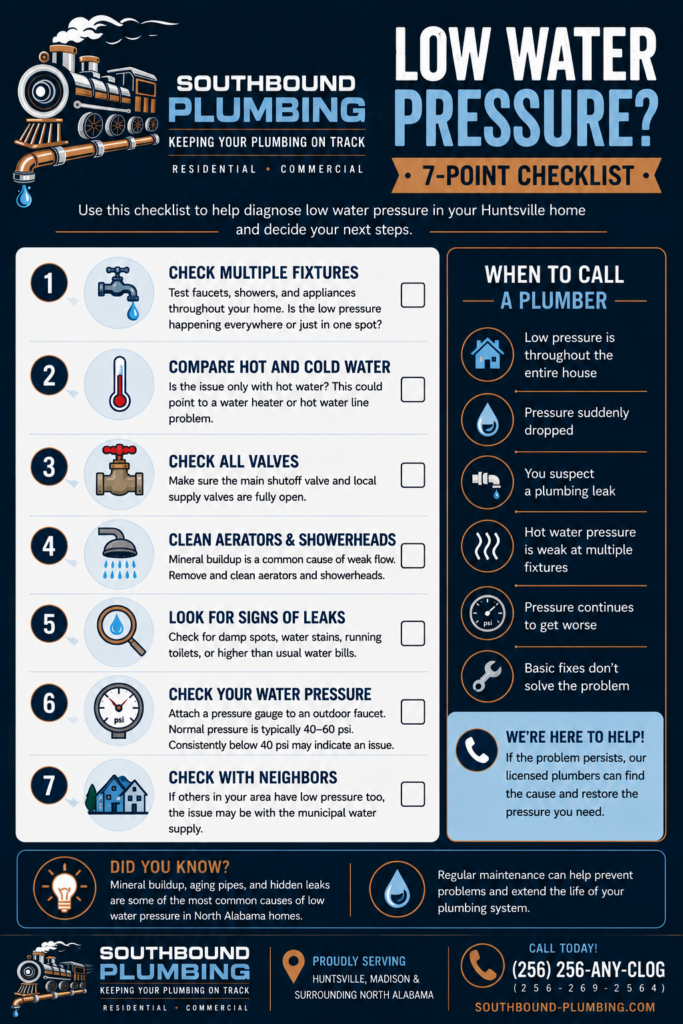
Check other fixtures. Determine whether the problem is isolated or affects the whole house.
Compare hot and cold water. This can help determine whether the problem involves a fixture, the hot-water system, or the broader plumbing system.
Clean accessible aerators and shower heads. Follow the manufacturer’s instructions to remove sediment or mineral deposits.
Check accessible valves. Make sure valves haven’t accidentally been left partially closed. Do not force stuck or corroded valves.
Look for signs of leaks. Check for damp areas, water stains, unexpected water usage, or other signs that water may be escaping.
Check for local water-service issues. If the whole house suddenly loses pressure, determine whether your water provider has reported an interruption.
If these basic checks don’t reveal the cause, professional diagnosis is the next step.
When Should You Call a Plumber for Low Water Pressure?
Consider calling a plumber if:
- Pressure is low throughout your house.
- Water pressure suddenly drops without an obvious explanation.
- Multiple fixtures are affected.
- Hot-water flow is weak throughout the home.
- You notice signs of a plumbing leak.
- Pressure continues to get worse.
- Cleaning an affected fixture doesn’t solve the problem.
- A valve is stuck, damaged, or corroded.
- You suspect a problem with a pressure regulator or main supply line.
A plumber can determine whether you’re dealing with an actual pressure problem, restricted water flow, or a combination of the two.
How Does a Plumber Diagnose Low Water Pressure?
Diagnosing low water pressure starts with identifying where the problem occurs.
Depending on the symptoms and plumbing system, a plumber may evaluate water pressure and flow, inspect accessible valves and fixtures, check for leaks, examine pressure-regulating equipment, evaluate the hot-water system, and look for restrictions within the piping.
The goal isn’t simply to increase pressure. It’s to determine why water isn’t reaching your fixtures as expected and correct the underlying problem.
Frequently Asked Questions About Low Water Pressure
What is the most common cause of low water pressure?
There isn’t one cause that applies to every home. Weak flow at a single fixture is often related to the fixture, aerator, shower head, valve, or supply line. Low pressure throughout the house can point to a valve, leak, pressure regulator, piping restriction, or water-supply issue.
Why did my water pressure suddenly get low?
A sudden drop can result from a water-supply interruption, valve issue, leak, pressure regulator problem, or another change within the plumbing system. Check whether the issue affects one fixture or the entire house and whether nearby homes are experiencing the same problem.
Why is my shower pressure low but my faucets are fine?
If other fixtures have normal flow, the shower itself is the first place to investigate. A clogged shower head, mineral buildup, cartridge issue, valve problem, or restriction in the shower plumbing can reduce flow without affecting the rest of the house.
Can a plumbing leak cause low water pressure?
Some leaks can contribute to reduced pressure or flow, particularly when a significant amount of water escapes before reaching your fixtures. Look for additional warning signs such as unexplained water usage, damp areas, water stains, or sounds of running water.
Why is my hot water pressure lower than my cold water pressure?
If the difference occurs throughout the house, the problem may involve the water heater, a valve, hot-water piping, or another restriction on the hot-water side. If only one fixture is affected, investigate that fixture before assuming there is a system-wide problem.
Can mineral buildup cause low water pressure?
Mineral deposits and sediment can restrict flow through aerators, shower heads, valves, and other plumbing components. If the problem affects only one fixture, cleaning or replacing that component may help. Repeated restrictions throughout the home may warrant further investigation.
When should I call a plumber for low water pressure?
Call a plumber when low pressure affects multiple fixtures, appears suddenly without a known utility issue, continues getting worse, or occurs alongside signs of a leak. You should also seek professional help if you suspect a pressure regulator, damaged valve, supply line, or piping problem.
Get Help With Low Water Pressure in Huntsville, AL
If you’ve cleaned the fixtures, checked accessible valves, and still can’t figure out why your water pressure has dropped, the problem may be deeper in the plumbing system.
Southbound Plumbing serves homeowners throughout Huntsville, Madison, and surrounding North Alabama communities. We can help identify what’s affecting your home’s water pressure or flow and recommend the appropriate repair based on what we find.
Dealing with weak or inconsistent water pressure? Contact Southbound Plumbing to schedule an evaluation and get to the source of the problem.