That big oak in the front yard gives you shade all summer. It might also be quietly working its way into your sewer line. Tree roots slip into sewer pipes through tiny cracks and loose joints, then keep growing inside until they snag toilet paper and waste and cause a backup. The good news is that caught early, roots can be cleared out and kept in check. The trick is knowing how far along things are, so you don’t end up paying for the wrong fix.
How Do Tree Roots Get Into a Sewer Line?
Roots aren’t strong enough to break through a healthy pipe. What they’re really good at is finding water. A sewer line gives off a little moisture and warmth through tiny gaps at the joints and small cracks, and roots follow that like a trail. Once a thin root finds an opening, it grows in, and then it keeps growing.
Older homes tend to have it worse. Clay and cast iron sewer pipes were laid in short sections, so there are a lot of joints, and every joint is a possible way in. Newer plastic pipe has far fewer joints, though a shifted or poorly glued one can still let roots through. In established neighborhoods with big, mature trees, like parts of Jones Valley and South Huntsville, roots are one of the most common reasons a main line starts giving people trouble.
Fall is often when folks first notice. Roots grow fast all summer, and by October there’s enough of a tangle inside the pipe to start catching everything that goes by.
Signs of Tree Roots in Your Sewer Line
Root problems sneak up on you. The early signs are easy to shrug off, and by the time it’s obvious, the line is usually pretty clogged. Here’s how it tends to play out.
Early on: things just feel a little slow
The drains all seem a bit lazier than they used to be. You hear the toilet gurgle when the tub drains or the washing machine empties. You find yourself reaching for the plunger more than you’d expect.
Getting worse: more than one drain acting up
Now several drains are slow at the same time. You might catch a sewer smell near a floor drain or out in the yard, and our guide to why your house smells like sewer can help you tell whether roots are the likely cause. The lowest drain in the house, like a basement floor drain or a downstairs shower, starts backing up when the washer drains. You may even notice one strip of lawn that’s greener and thicker than the rest, right over where the sewer line runs.
Late stage: backups
Sewage comes up into a tub, shower, or floor drain. Clogs come right back a few weeks after being cleared. You might see soggy ground or even a sinking spot in the yard along the line. If sewage is backing up into your home, don’t wait it out. Call our 24/7 emergency plumber.
Here’s the rule of thumb: if more than one drain is acting up at once, the problem usually isn’t any single drain. It’s the main line they all share. Our post on why your toilet keeps clogging walks through how to tell a one-fixture clog from a main line problem.
Does Root Killer for Sewer Lines Work?
You’ve probably seen the root killer products at the hardware store, usually a foaming treatment or crystals you flush down the toilet. They do work, just not the way a lot of people hope. They kill the roots they touch, which slows down how fast new ones grow back.
What root killer won’t do is clear a pipe that’s already blocked. Dead roots still take up space, and if the line is clogged, the product mostly just sits on top of the clog. It also doesn’t fix the crack or gap that let the roots in to begin with.
Think of root killer as upkeep after the line has been cleared, not the fix itself. And read the label closely. Some products aren’t safe for septic systems, and some chemicals are restricted in certain areas.
How to Get Rid of Tree Roots in a Sewer Line
There are really three tools for the job, and which one you need depends on how far along the problem is.
| Option | What it does | When it makes sense |
|---|---|---|
| Root cutting | A drain machine with a cutting blade clears the roots out of the pipe and gets things flowing again | Active clogs and early to mid-stage roots |
| Root treatment after cutting | Kills what’s left behind so roots grow back slower | Keeping a line with a known root problem under control |
| Repairing the damaged section | Replaces the cracked, separated, or crushed part of the pipe | Late stage damage, or clogs that keep coming back fast |
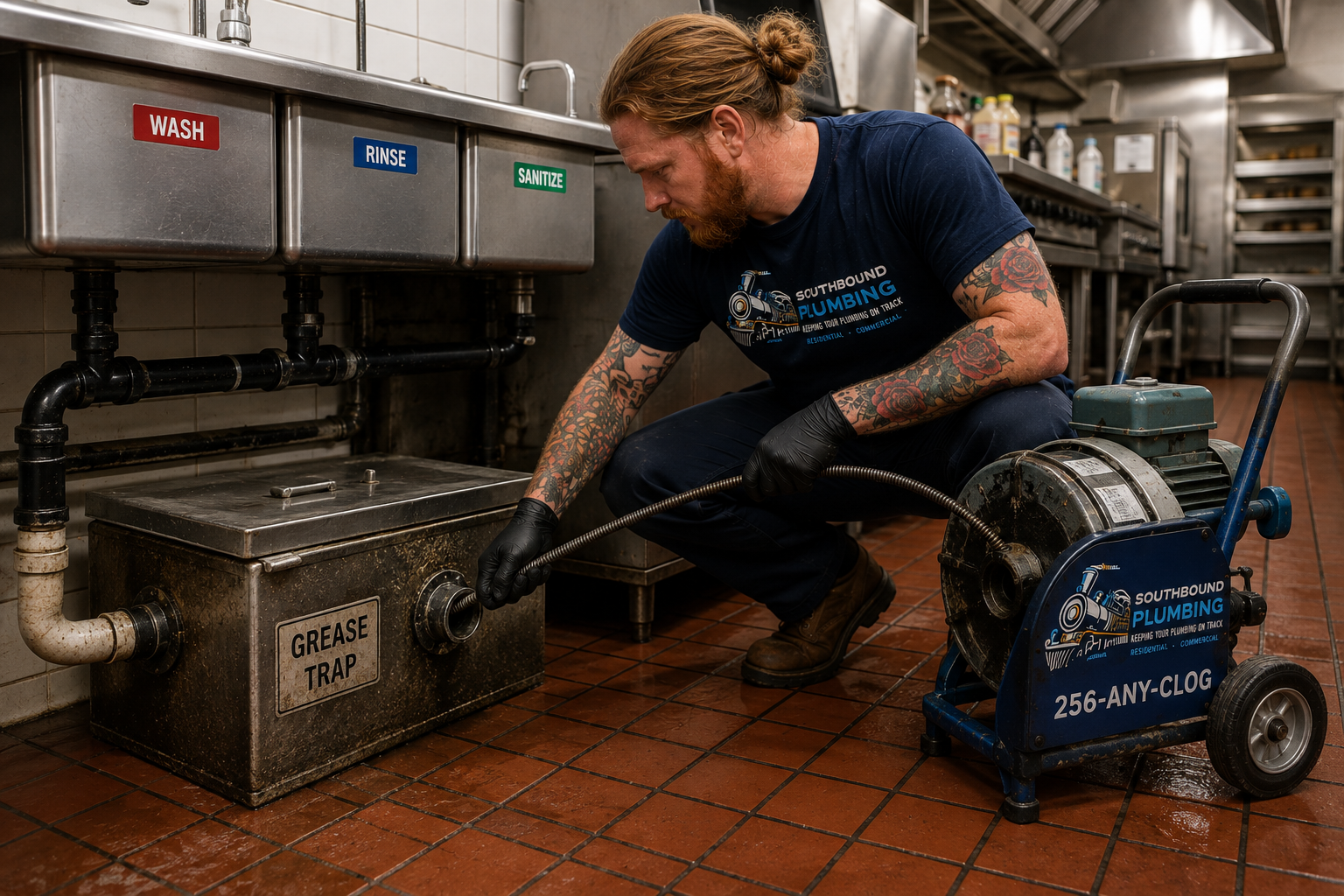
For most homeowners, root cutting through our drain cleaning service is the place to start. It gets your drains working again the same day, and it tells us a lot about what shape the pipe is in. If the roots come back within a few weeks, or the line still drains slow after it’s been cut, that usually means the pipe itself is damaged and cleaning alone won’t hold.
When a section is broken, the lasting fix is repairing that piece of pipe. We’ll show you what we found, explain your options in plain English, and give you a flat-rate price before anybody picks up a shovel.
How to Keep Roots Out of Your Sewer Line
You don’t have to cut down every tree in the yard. A few simple habits go a long way:
- Find out where your sewer line runs before planting trees or big shrubs
- Keep thirsty, fast-growing trees like willows, silver maples, and poplars well away from the line
- If your line has had roots before, put root cutting on a regular schedule
- Don’t ignore the early signs. Slow drains are a lot cheaper to deal with than a backup
Frequently Asked Questions
How do I know if I have tree roots in my sewer line?
Watch for several slow drains at once, toilets that gurgle, backups in the lowest drain in the house, and clogs that keep coming back after you clear them.
Does root killer work on sewer lines?
It helps, but only as upkeep after the line has been cleared. It won’t open up a blocked pipe or fix the crack the roots came in through.
Will the roots come back after the line is cleaned?
Often, yes, because the opening they came in through is still there. Regular root cutting or repairing the damaged section is what keeps them under control.
Who is responsible for roots in the sewer line?
In most cases, the homeowner is responsible for the line from the house out to the city connection. Check with Huntsville Utilities or your local provider to see exactly where that line falls for your property.
Drains Slowing Down All Over the House?
We’re locally owned and based right here in Hampton Cove. Our licensed master plumber will find out what’s going on in your line, tell you plainly what it needs, and give you a flat-rate price before any work starts.
Call (256) 269-2564 or request a free estimate online.