Key Takeaways: Why Is My Toilet Constantly Running?
- A constantly running toilet is almost always caused by a faulty flapper, a worn fill valve, or a float set too high — all of which are fixable.
- A running toilet can waste 200 gallons of water per day, which shows up fast on your Huntsville Utilities bill.
- The flapper is the most common culprit. If you can hear your toilet running between flushes, start there.
- Most running toilet repairs are DIY-friendly and cost $10 to $30 in parts from any hardware store.
- If the toilet keeps running after you’ve replaced the flapper and adjusted the float, the fill valve likely needs replacing. This is a job most homeowners can handle in under an hour.
- Call a local plumber if the toilet runs intermittently without being flushed, if you see water around the base, or if DIY fixes haven’t solved the problem.
Why Is My Toilet Constantly Running?
DIRECT ANSWER: Why is your toilet constantly running? A toilet keeps running when water leaks past the flapper into the bowl, when the float is set too high and water spills into the overflow tube, or when the fill valve is worn and can’t shut off properly. Identifying which component is failing takes less than five minutes and determines whether this is a DIY fix or a call to a plumber.
A toilet that won’t stop running is one of the most common plumbing complaints in Huntsville homes, and one of the most wasteful. That constant hissing sound in the background isn’t just annoying. It means water is flowing through your toilet nonstop, and according to the U.S. Environmental Protection Agency, a running toilet can waste up to 200 gallons of water per day. Over a month, that’s thousands of extra gallons on your Huntsville Utilities bill.
The good news: a constantly running toilet almost always has one of three causes, all of which are diagnosable in about five minutes and fixable without a plumber in most cases. Here’s how to figure out exactly what’s wrong and what to do about it.
How a Toilet Tank Actually Works
Understanding what’s inside your tank makes diagnosing a running toilet much faster.
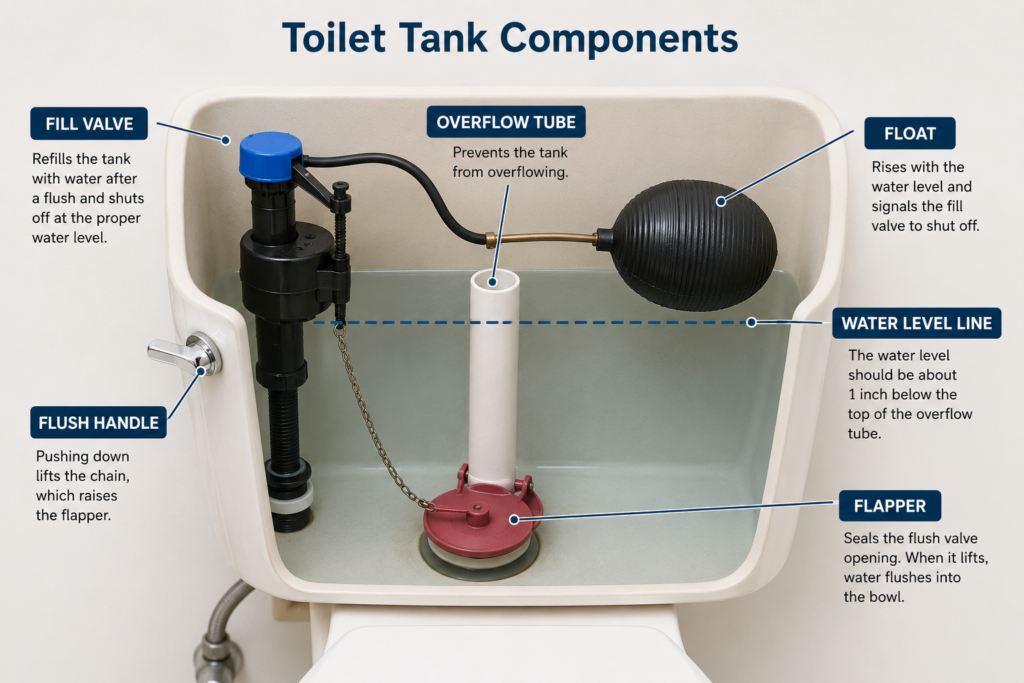
Lift the lid off your toilet tank and you’ll see three main components working together every time you flush:
- The flapper — a rubber seal at the bottom of the tank that opens when you flush and closes to hold water in the tank as it refills.
- The fill valve — the mechanism that refills the tank with water after a flush and shuts off when the water reaches the correct level.
- The float — a device connected to the fill valve that rises with the water level and signals the fill valve to shut off.
When any one of these three parts fails or goes out of adjustment, water keeps flowing. The fix depends entirely on which one is the problem.
Cause 1: A Worn or Warped Flapper
The flapper is the most common reason a toilet keeps running, and replacing it is usually a $10 fix you can do in 15 minutes.
The flapper creates a watertight seal at the bottom of your tank. Over time, the rubber warps, hardens, or develops mineral buildup from Huntsville’s water supply, preventing it from seating properly. When the seal isn’t tight, water slowly leaks from the tank into the bowl — and the fill valve runs continuously to compensate.
How to Tell If Your Flapper Is the Problem
Drop a few drops of food coloring into the tank and wait 10 minutes without flushing. If color appears in the bowl, your flapper is leaking and needs to be replaced.
You can also press down gently on the flapper with your finger while the toilet is running. If the running stops, the flapper isn’t sealing properly.
How to Replace a Toilet Flapper
1. Turn off the water supply valve at the wall behind the toilet.
2. Flush to empty the tank.
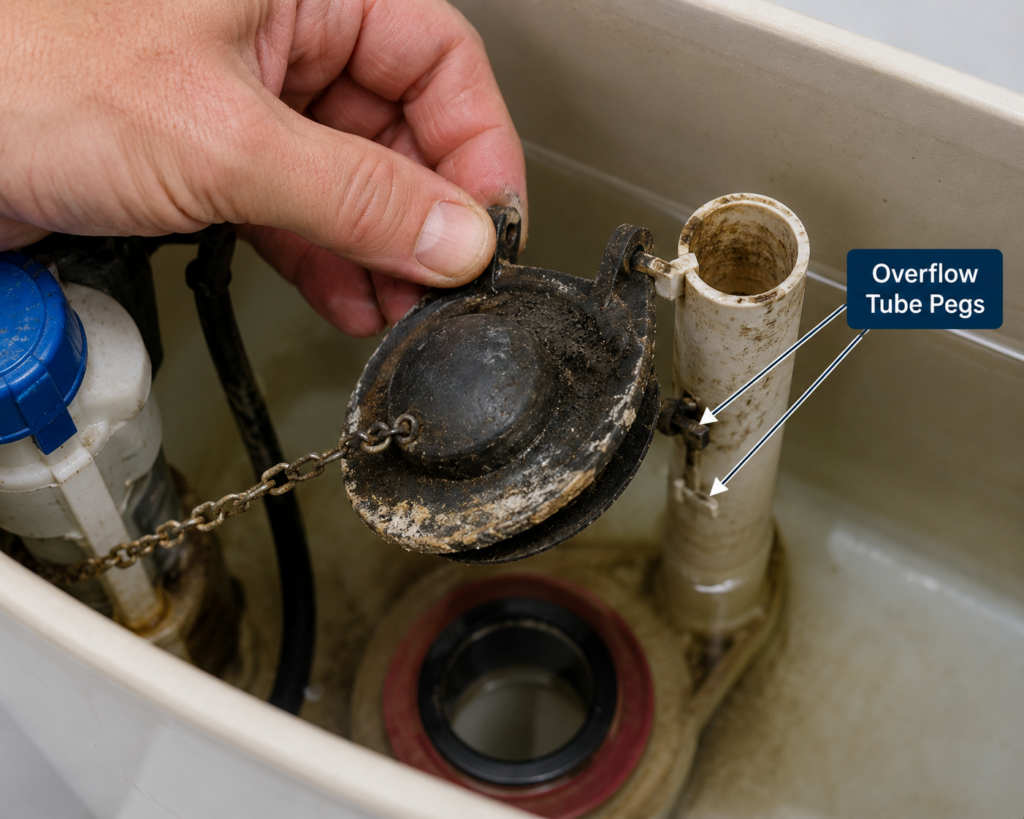
3. Unhook the old flapper from the pegs on the overflow tube and disconnect the chain from the flush handle arm.
4. Take the old flapper to a hardware store to match the size, or buy a universal flapper.
5. Hook the new flapper onto the overflow tube pegs, attach the chain with about half an inch of slack, and turn the water back on.
Test the flush a few times and check for running. Most of the time, this solves it entirely.
Cause 2: The Float Is Set Too High
If water is spilling into the overflow tube, your float is set too high and the tank never stops refilling, even though nothing is actually leaking.
The overflow tube is the tall vertical tube in the center of your tank. Its job is to prevent flooding by draining excess water into the bowl if the tank overfills. If your float is adjusted too high, the water level reaches the overflow tube before the fill valve shuts off, and water trickles into the bowl constantly.
How to Check the Float Level
Remove the tank lid and look at the water level. It should sit about one inch below the top of the overflow tube. If water is at or above the tube opening, the float is set too high.
How to Adjust the Float
The adjustment method depends on your fill valve type:
- Ball float (older toilets): Bend the float arm down slightly or turn the adjustment screw at the valve to lower the water level.
- Cup float (newer toilets): Pinch the clip on the float and slide it down the fill valve shaft, or turn the adjustment screw counterclockwise.
After adjusting, flush and watch the refill cycle. The water should stop about an inch below the overflow tube. If it does, you’re done. If the fill valve still runs after the water drops below the tube, the valve itself is the problem.
Cause 3: A Failing Fill Valve
If you’ve checked the flapper and adjusted the float and the toilet still keeps running, the fill valve is worn out and needs to be replaced.
Fill valves wear out over time. The internal seals degrade, sediment from the water supply builds up inside the valve, and eventually it can no longer shut off cleanly. This is especially common in homes across Hampton Cove, Madison, and South Huntsville where older plumbing fixtures haven’t been serviced in years.
A new fill valve costs $12 to $20 at any hardware store and takes about 30 minutes to install.
How to Replace a Fill Valve
- Turn off the water supply valve and flush to empty the tank.
- Use a sponge or towel to remove any remaining water in the tank.
- Disconnect the water supply line from the bottom of the tank.
- Unscrew the locknut under the tank and lift out the old fill valve.
- Set the height on the new fill valve so the critical level mark sits one inch above the overflow tube.
- Drop it in, tighten the locknut, reconnect the supply line, and turn the water back on.
- Flush several times and verify the tank fills to the correct level and shuts off cleanly.
If you’re not comfortable with these steps, toilet repair service is a straightforward job for any licensed plumber.
When to Skip the DIY and Call a Plumber
Most running toilet repairs are DIY-friendly, but a few situations call for a professional.
Call Southbound Plumbing if:
- The toilet runs intermittently on its own without being flushed. This is called ghost flushing and usually means a slow flapper leak, but it can also indicate a crack in the overflow tube or a more complex valve issue.
- You’ve replaced the flapper and fill valve and it still runs. At that point, the problem may be with the flush valve seat, which requires additional parts or tank work.
- There’s water on the floor around the base. A running toilet combined with a floor leak is a different problem entirely and needs same-day attention.
- The toilet is older than 20 to 25 years. At that age, replacing individual components can become a diminishing return. A plumber can assess whether a full toilet replacement makes more financial sense.
Homeowners in Jones Valley, Big Cove, Monte Sano, and Gurley can reach our team for emergency toilet repair throughout the area.
What a Running Toilet Actually Costs You
A toilet that runs constantly isn’t just annoying. It’s actively costing you money every single day.
The EPA estimates a running toilet wastes up to 200 gallons per day. At Huntsville Utilities’ current residential water rates, that adds up to an extra $70 or more per month on your water bill for a single toilet. If you have multiple toilets or the problem has been going on for weeks, the total waste is significant.
The repair parts (a flapper, a float adjustment, or a new fill valve) cost $10 to $30 total. The math makes fixing it immediately the obvious choice.
FAQs: Why Is My Toilet Constantly Running
Why does my toilet keep running after I flush?
After a flush, your toilet should refill and stop within about a minute. If it keeps running past that point, water is escaping either through a leaking flapper, past an overflow tube that’s too full, or through a fill valve that won’t shut off. Start by checking the flapper. It’s the most common cause and the easiest fix.
How do I stop my toilet from running without calling a plumber?
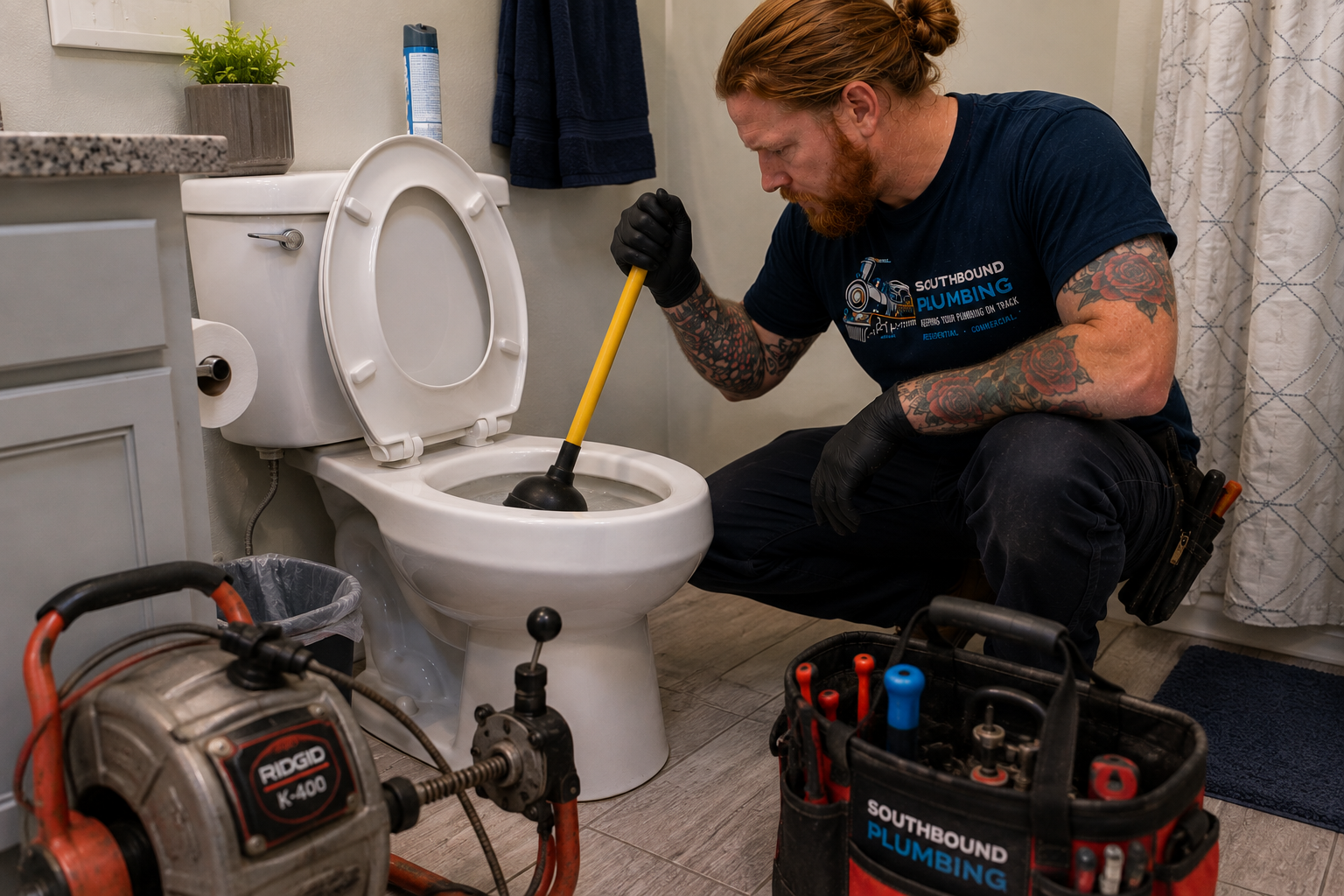
Lift the tank lid and identify the problem. If food coloring leaks into the bowl without flushing, replace the flapper. If water is spilling into the overflow tube, lower the float. If neither of those fixes it, replace the fill valve. All three repairs cost under $30 in parts and require only basic tools. Most homeowners in Huntsville can complete them in under an hour.
Can a running toilet increase my water bill?
Yes, significantly. A running toilet can waste up to 200 gallons of water per day according to the U.S. Environmental Protection Agency. At Huntsville Utilities rates, that can add $70 or more per month to your bill. A toilet that has been running for several weeks can waste thousands of gallons before it gets noticed.
What is ghost flushing and what causes it?
Ghost flushing is when your toilet refills on its own without being flushed, usually every 20 to 30 minutes. It happens when water slowly leaks from the tank into the bowl through a faulty flapper. The tank water level drops enough to trigger the fill valve, which refills the tank. Replacing the flapper usually resolves it. If not, call a plumber.
How long does it take to fix a running toilet?
Most running toilet repairs take 15 to 30 minutes once you have the replacement part. A flapper swap takes about 15 minutes. Adjusting the float takes less than five minutes. Replacing the fill valve takes 20 to 30 minutes. If you’re not comfortable with the repair or the problem persists after DIY attempts, a licensed plumber can typically resolve it in a single visit.
Is a running toilet a plumbing emergency?
A running toilet by itself is not an emergency, but it should not be ignored. The water waste and cost add up quickly. If the running toilet is also leaking water onto the floor, that becomes an urgent situation that needs same-day service. Contact Southbound Plumbing if you see water outside the toilet or if DIY repairs haven’t resolved the problem.
How much does it cost to fix a running toilet?
If you repair it yourself, parts cost $10 to $30. A flapper runs $5 to $15 and a fill valve runs $12 to $20 at most hardware stores. If you hire a plumber, a running toilet repair typically falls in the range of $100 to $200 depending on what needs to be replaced and how long the job takes. Southbound Plumbing offers upfront pricing. Contact us for a quote.
If you’ve worked through the steps above and your toilet still won’t stop running, or if you’d rather have a licensed plumber handle it from the start, Southbound Plumbing is ready to help.
Toilet Still Running? Southbound Plumbing Can Fix It Today.
We provide same-day toilet repair throughout Huntsville, Madison, Meridianville, Hampton Cove, Jones Valley, South Huntsville, and surrounding North Alabama communities.
Our licensed plumbers diagnose running toilets fast, give you upfront pricing, and get it fixed right the first time. No guesswork, no unnecessary upsells.
Contact Southbound Plumbing today or visit our toilet repair page to learn more about what we fix.