Key Takeaways
- Most Huntsville homes have the shutoff valve inside the house near the front foundation wall, in a utility room, crawl space, or garage.
- All homes also have a curb stop (street-side shutoff) buried near the sidewalk or property line, operated by the water utility.
- Gate valves (older, round handle) and ball valves (newer, lever handle) are the two most common types, and both fully stop water flow when closed correctly.
- Knowing your shutoff location before an emergency can prevent thousands of dollars in water damage.
- Southbound Plumbing recommends every homeowner locate and test their shutoff valve annually, especially after a hard Madison County winter.
- If your valve is stuck, corroded, or missing, call a licensed plumber before a pipe bursts, not after.
A pipe bursts at 11 p.m. Water is spreading across your floor. Do you know where your main water shutoff valve is?
If you are not sure, you are not alone. Many homeowners in Huntsville, Madison, and across Madison County have never located their shutoff valve, and that gap becomes a very expensive problem the moment something goes wrong. Knowing how to find your main water shutoff valve is one of the most practical things you can do as a homeowner. This guide walks you through exactly where to look, what you are looking for, and what to do if the valve does not work when you need it most.
Where Is the Main Water Shutoff Valve Located?
The main water shutoff valve is almost always located where the water supply line enters your home, typically near the front foundation wall on the interior of the house.
The most common locations vary by home type. Here is where to start looking:
Inside the home:
- Front interior wall, facing the street
- Utility room or mechanical room
- Crawl space, near the access point
- Garage, along the wall closest to the street
- Under the kitchen sink (less common for the main shutoff, more common for an individual fixture shutoff)
- Basement, along the front or side wall where the supply line enters
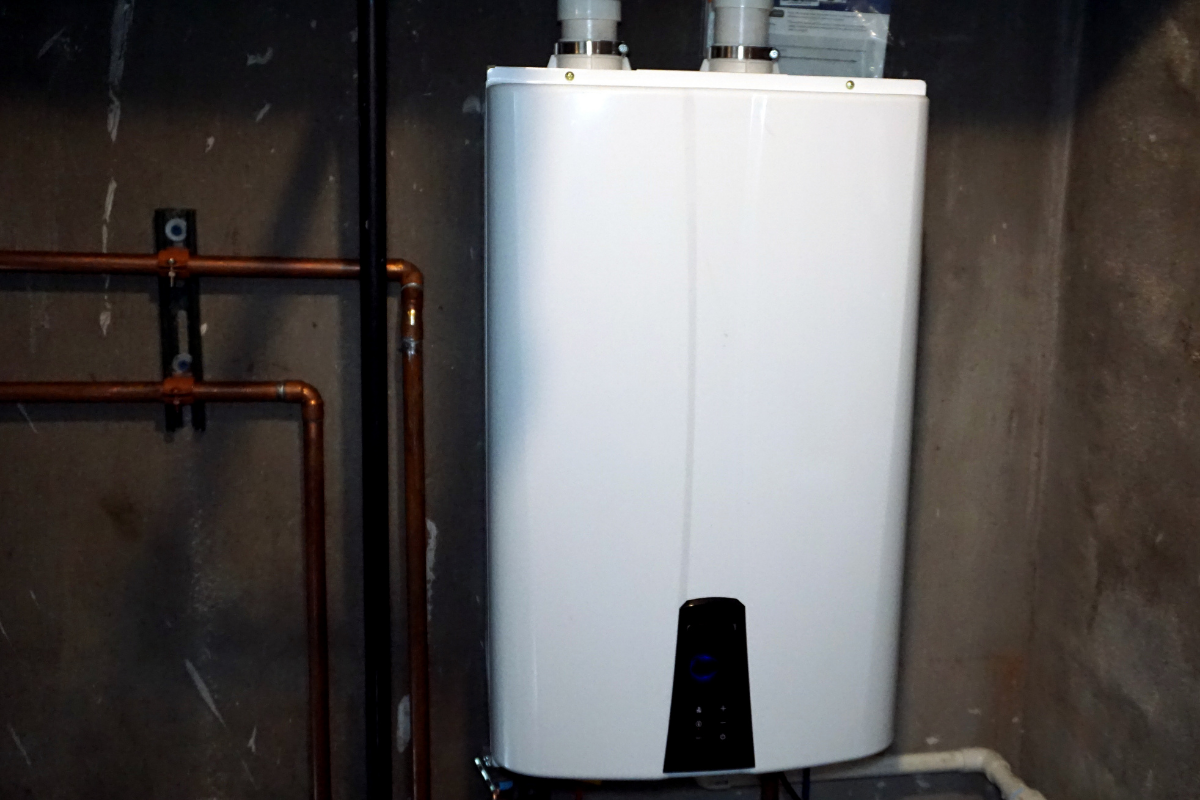
For homes on a slab foundation, which is common in newer Huntsville neighborhoods like Hampton Cove and Providence, the valve is often in the garage or inside a utility closet near the water heater.
For older homes in areas like Jones Valley or Monte Sano with crawl spaces, the valve is frequently located near the crawl space access door.
If you cannot find it inside, do not give up. There is a second shutoff option outside.
The Curb Stop: Your Street-Side Backup Shutoff
Every property also has a curb stop, sometimes called the street-side shutoff or meter shutoff. This valve sits in a small underground box, usually near the sidewalk or the property line between your home and the street.
The curb stop is controlled by Huntsville Utilities and is not meant for routine homeowner use. Accessing it requires a special tool called a meter key or curb key. In a true emergency, if you cannot find your interior shutoff, a plumber can access the curb stop to cut water to your home.
Do not confuse the curb stop with your main interior shutoff. For day-to-day emergencies, you want the interior valve. It is faster, more accessible, and does not require special tools.
What Does a Main Water Shutoff Valve Look Like?
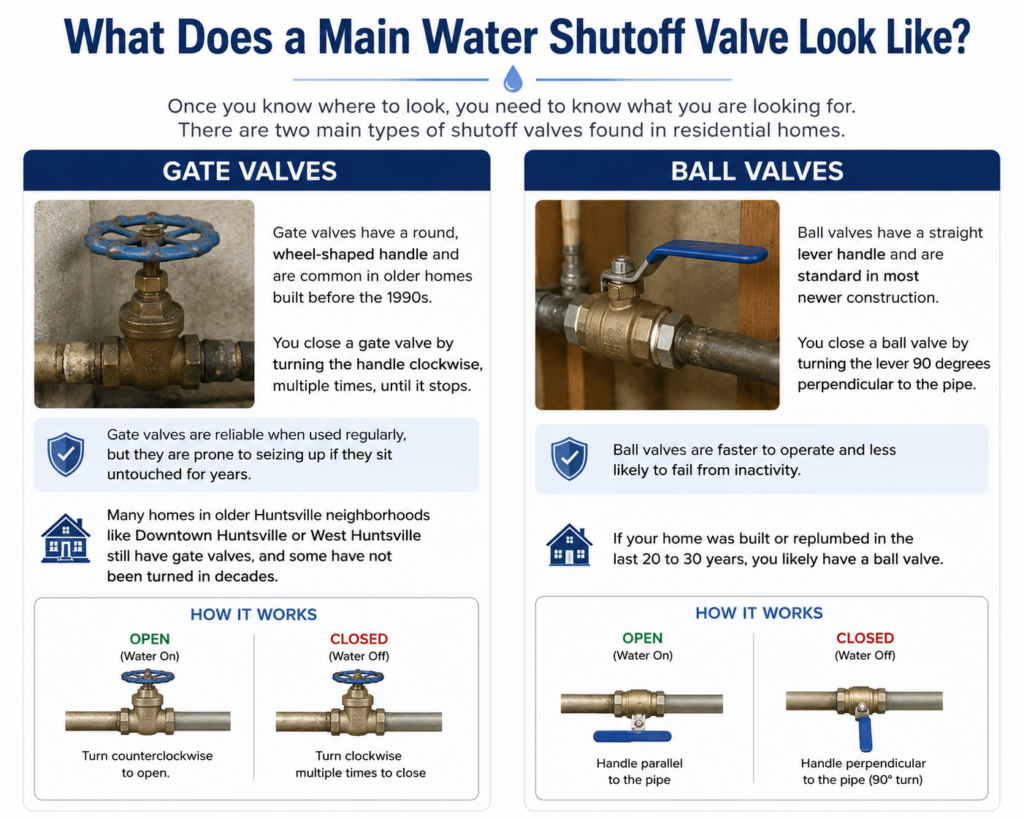
Once you know where to look, you need to know what you are looking for. There are two main types of shutoff valves found in residential homes.
Gate Valves
Gate valves have a round, wheel-shaped handle and are common in older homes built before the 1990s. You close a gate valve by turning the handle clockwise, multiple times, until it stops.
Gate valves are reliable when used regularly, but they are prone to seizing up if they sit untouched for years. Many homes in older Huntsville neighborhoods like Downtown Huntsville or West Huntsville still have gate valves, and some have not been turned in decades.
Ball Valves
Ball valves have a straight lever handle and are standard in most newer construction. You close a ball valve by turning the lever 90 degrees perpendicular to the pipe. If the handle is parallel to the pipe, water is flowing. If it is perpendicular, water is off.
Ball valves are faster to operate and less likely to fail from inactivity. If your home was built or replumbed in the last 20 to 30 years, you likely have a ball valve.
How to Test Your Shutoff Valve
To test your main water shutoff valve, turn off the valve completely, then turn on a faucet in your home. If water stops flowing within a few seconds, the valve works. If water continues to trickle or flow freely, the valve is failing and needs to be repaired or replaced by a licensed plumber.
Testing your valve takes about five minutes and is worth doing once a year. Here is a simple process:
- Locate the valve using the guidance above.
- Turn off the valve fully. For a gate valve, turn clockwise until it stops. For a ball valve, rotate the lever 90 degrees.
- Go to the closest faucet and turn it on.
- Watch for flow. Water should stop or reduce to a trickle from residual pressure in the lines.
- Turn the valve back on fully. For gate valves, turn it all the way on and then back a half-turn to prevent it from seizing in the open position.
- Note the valve’s condition. Any corrosion, visible leaks around the valve body, or difficulty turning it are signs you need a plumber to evaluate it.
Why This Matters More in Huntsville Than You Might Think
Huntsville Utilities draws from the Tennessee River system, which carries naturally higher mineral content than many other regions. That mineral content contributes to faster sediment and scale buildup inside pipes and valves, particularly in homes with older plumbing.
A gate valve that has not been operated in ten or fifteen years may be partially calcified. Forcing a stuck valve can crack the valve body or damage fittings, turning a routine test into an emergency repair. If your shutoff valve feels stiff or will not turn smoothly, do not force it. Call a plumber first.
This is especially relevant after harsh winters. Freeze events in Madison County, while not constant, do happen. Pipes that experience stress during cold snaps can shift, and the last thing you want heading into spring is a compromised shutoff valve you have never tested.
Individual Fixture Shutoffs vs. the Main Shutoff
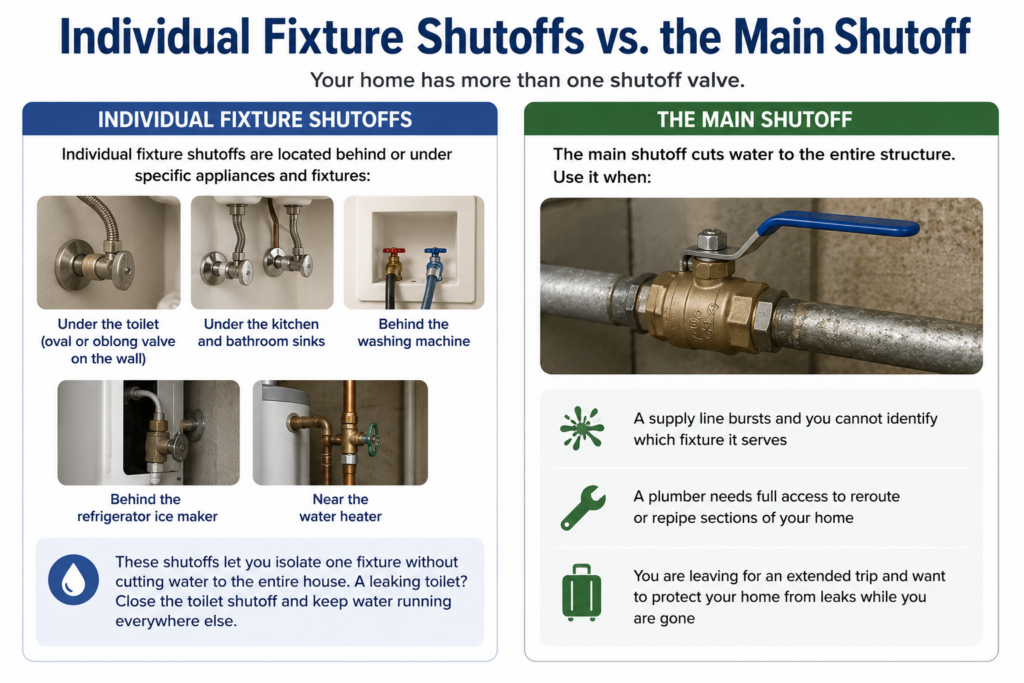
Your home has more than one shutoff valve. Individual fixture shutoffs are located behind or under specific appliances and fixtures:
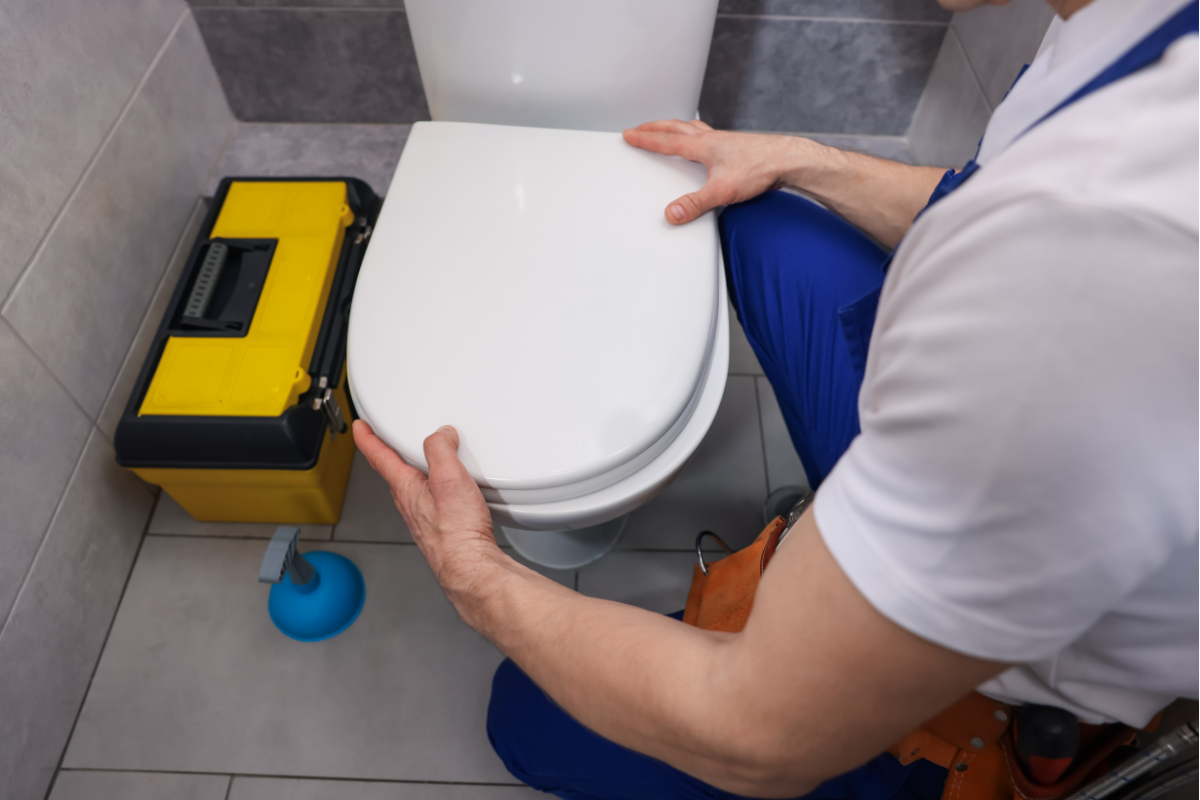
- Under the toilet (oval or oblong valve on the wall)
- Under the kitchen and bathroom sinks
- Behind the washing machine
- Behind the refrigerator ice maker
- Near the water heater
These shutoffs let you isolate one fixture without cutting water to the entire house. A leaking toilet? Close the toilet shutoff and keep water running everywhere else.
The main shutoff cuts water to the entire structure. Use it when:
- A supply line bursts and you cannot identify which fixture it serves
- A plumber needs full access to reroute or repipe sections of your home
- You are leaving for an extended trip and want to protect your home from leaks while you are gone
What to Do If Your Shutoff Valve Is Broken or Missing
Some homeowners discover their shutoff valve is corroded, stuck, leaking, or simply not where it should be. This is more common than most people expect, especially in homes that have changed hands multiple times or been renovated without pulling permits.
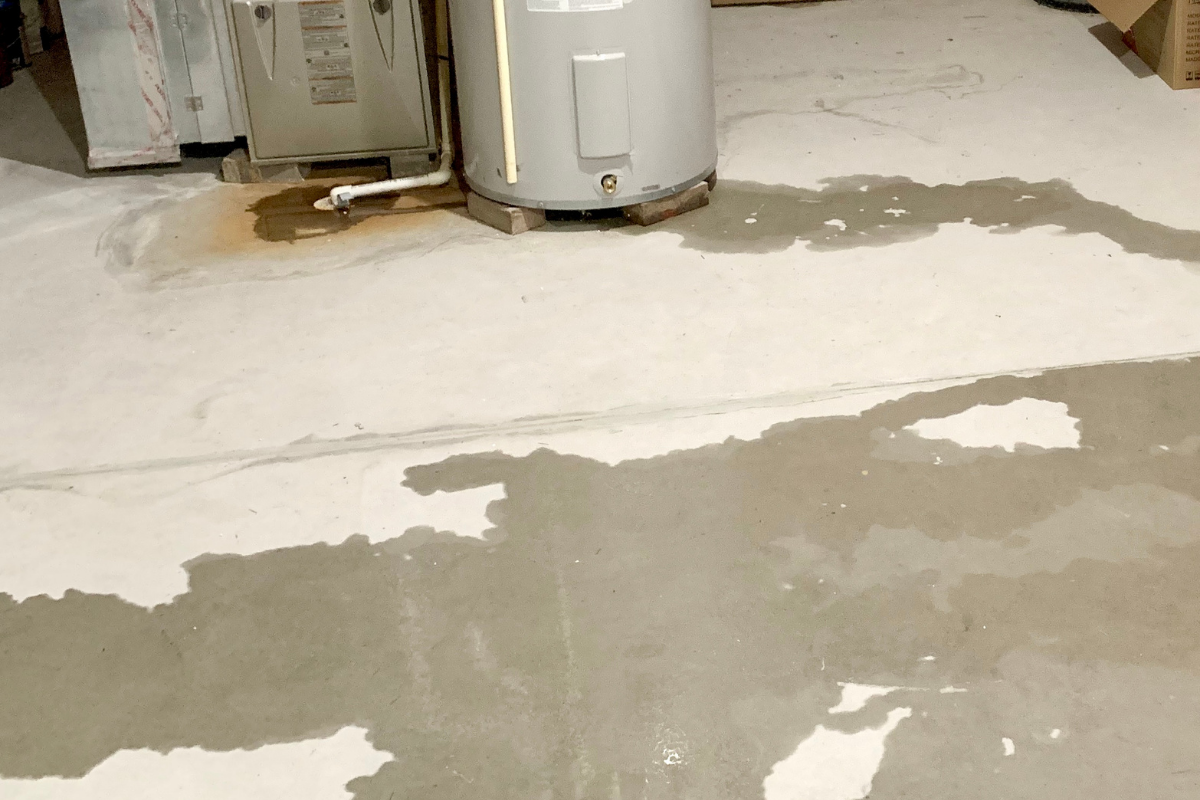
Do not wait on this. A shutoff valve that does not work is not a minor inconvenience. It is a liability. If a pipe fails and you cannot stop water flow, the damage compounds by the minute.
Southbound Plumbing’s licensed plumbers serve Huntsville and the surrounding Madison County area and can inspect, repair, or replace your shutoff valve quickly. In many cases, a valve replacement is a straightforward job that takes less than an hour.
FAQs
How do I find my main water shutoff valve if I just moved in?
Start at the front interior wall of your home, closest to the street. Check the utility room, crawl space access, or garage wall nearest the street. If you cannot locate it, review your home inspection report, which should document the valve’s location. Alternatively, call a local plumber in Huntsville to help you locate and label it.
What does a main water shutoff valve look like?
It is either a round wheel-style handle (gate valve, usually older homes) or a straight lever handle (ball valve, more common in newer homes). Both are typically connected to a pipe ranging from three-quarters of an inch to one and a quarter inches in diameter. The valve is usually brass or chrome-colored and is attached directly to your main supply line where it enters the house.
How do I turn off the water to my whole house quickly?
Find your main shutoff valve, usually near the front interior wall or in a utility room. For a ball valve, rotate the lever handle 90 degrees so it sits perpendicular to the pipe. For a gate valve, turn the round handle clockwise until it stops. Water flow should cease within seconds after closing.
Can I turn off the water myself at the street?
Technically yes, but accessing the curb stop at the street requires a special meter key tool and is typically reserved for utility workers and licensed plumbers. In a true emergency, your local utility (Huntsville Utilities) can shut off water at the meter. For routine situations, use your interior shutoff valve instead.
How often should I test my main water shutoff valve?
Test it at least once a year. Annual testing prevents the valve from seizing due to mineral buildup or corrosion, which is a real concern given the mineral content in Huntsville’s water supply. A few minutes of testing now can prevent a panicked discovery that your valve does not work during an actual emergency.
Why is my water shutoff valve hard to turn?
If the valve is stiff or will not move, it is likely corroded or calcified from mineral deposits. Do not force it. Forcing a seized valve can crack the valve body and create a much bigger problem. Call a licensed plumber to assess the valve. It may need to be lubricated, rebuilt, or replaced entirely.
What happens if I can’t find my shutoff valve during a leak?
Go directly to the curb stop outside near your sidewalk or property line and call your water utility immediately. Huntsville Utilities can shut off water at the meter. Then call an emergency plumber right away. After the crisis is resolved, make locating and labeling your interior shutoff valve a top priority so you are prepared for next time.
Call Southbound Plumbing for Shutoff Valve Help in Huntsville and Madison County
If you cannot find your shutoff valve, it is stuck, or it is leaking, do not guess your way through it.
Southbound Plumbing serves homeowners throughout Huntsville, Madison, Meridianville, Harvest, Owens Cross Roads, and the surrounding areas. Our licensed master plumbers can locate, test, repair, or replace your main shutoff valve, and help you understand your home’s plumbing so you are prepared before something goes wrong.
Call us or get a free estimatetoday. Whether it is a quick valve inspection or a full emergency plumbing response, Southbound Plumbing is the Huntsville area team that picks up the phone when it matters.