Key Takeaways
- Water heater lifespan: Most tank water heaters last 8 to 12 years. Beyond that, replacement is almost always more cost-effective than repair.
- Rusty or discolored hot water is one of the clearest signs of internal tank corrosion and typically means the unit needs full replacement.
- Rumbling or popping noises signal heavy sediment buildup. The tank is overworking, and your energy bills are likely rising as a result.
- Water pooling around the tank base is a plumbing emergency. Turn off the water supply and call a plumber the same day.
- Rising energy bills with no obvious cause can point to a water heater losing efficiency, especially in units older than 8 years.
- Huntsville homeowners: North Alabama’s water supply contributes to faster sediment buildup, which can push tank life toward the shorter end of the range without regular maintenance.
What Are the Signs You Need a New Water Heater?
The most common signs you need a new water heater include:
- Rusty or discolored hot water
- Rumbling or popping sounds
- Water leaking around the tank
- Hot water running out quickly
- A unit older than 10 years
Most tank water heaters last 8–12 years before replacement becomes more cost-effective than repair.
5 Signs You Need a New Water Heater
If your water heater is pushing 10 years old or you’ve started noticing something just feels off with your hot water, you’re not imagining it. Water heaters don’t fail overnight. They give you warning signs, and knowing what to look for can save you from a flooded utility closet or an unexpected cold shower on a January morning in Huntsville. Here are the five most important signs you need a new water heater and what to do when you spot them.
1. Your Water Heater Is More Than 10 Years Old
The age of your unit is the single most reliable predictor of failure.
The average tank-style water heater lasts between 8 and 12 years. If yours is past that window, you’re operating on borrowed time, even if it still technically works. Older units become progressively less energy-efficient, more prone to internal corrosion, and far more likely to spring a leak without much warning.
How do you find the age? Look at the serial number on the manufacturer’s label, usually on the upper portion of the tank. Most brands encode the manufacture date in the first few characters. You can also search the brand name plus “serial number date decoder” to interpret it quickly.
In North Alabama, where water hardness varies by neighborhood and municipal source, tanks on the older end of the spectrum tend to accumulate sediment faster. That accelerates wear and pushes you toward the lower end of the lifespan range.
According to the U.S. Department of Energy, water heating accounts for roughly 18% of a home’s total energy costs, making an inefficient or aging unit one of the most expensive appliances you own without realizing it. If your unit is 10 years or older, start budgeting for replacement now, even if it hasn’t caused problems yet.
2. You’re Getting Rusty or Discolored Hot Water
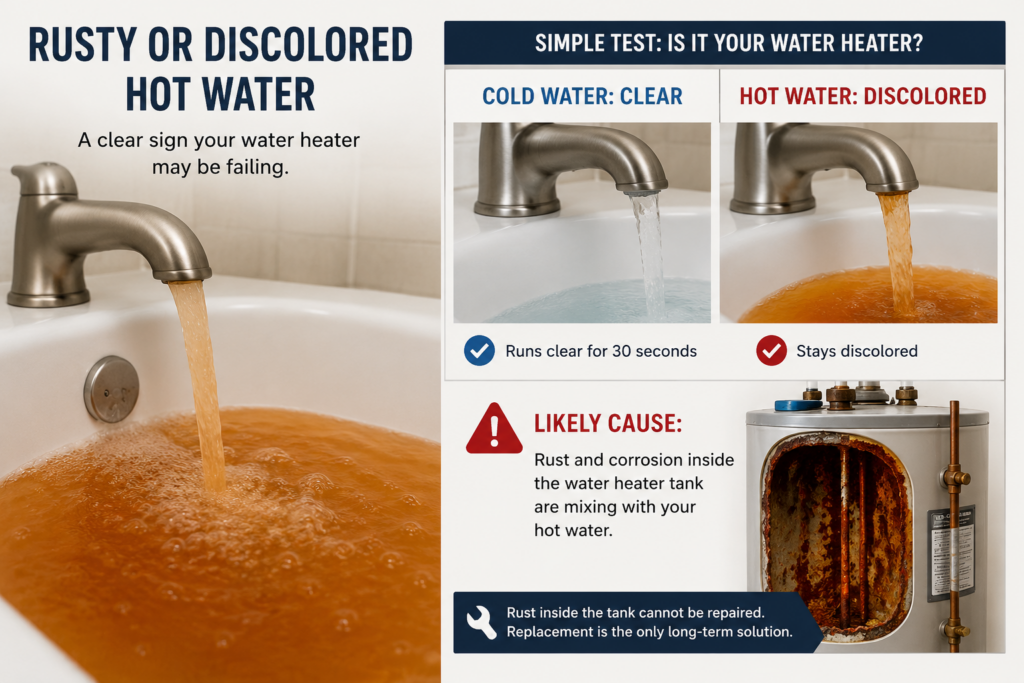
Rusty hot water is one of the most unmistakable water heater failing signs, and it should never be ignored.
When the interior of a steel tank begins to corrode, it releases rust particles into your water supply. You’ll notice this most obviously when filling a bathtub, where the water may appear orange, reddish-brown, or just “off.” Sometimes the discoloration is subtle and only noticeable against a white basin.
Here’s a simple test to rule out your pipes as the culprit:
- Run cold water from the same tap for 30 seconds.
- If the cold water runs clear but the hot water stays discolored, the problem is almost certainly the water heater.
- If both hot and cold water are discolored, the issue may be with your supply lines or main, and you should still call a plumber.
Rust inside the tank means the corrosion process is already underway. A corroded tank cannot be repaired, it needs to be replaced. Waiting increases the risk of a tank rupture.
3. You Hear Rumbling, Popping, or Banging Sounds
A water heater that sounds like it’s running a rock tumbler is telling you something important: sediment has built up on the bottom of the tank.
Over time, minerals from your water supply settle to the tank floor. Every time the burner fires, it heats through that layer of sediment before reaching the water. The rumbling and popping sounds you hear are pockets of water trapped under that sediment reaching boiling temperature.
This matters for a few reasons:
- The tank has to work harder, consuming more gas or electricity to deliver the same amount of hot water.
- The extra heat stress weakens the tank lining, accelerating wear.
- Efficiency drops noticeably, which shows up on your utility bills. The tank has to work harder, consuming more gas or electricity to deliver the same amount of hot water. The U.S. Department of Energy notes that sediment buildup is one of the leading causes of reduced water heater efficiency in residential homes.
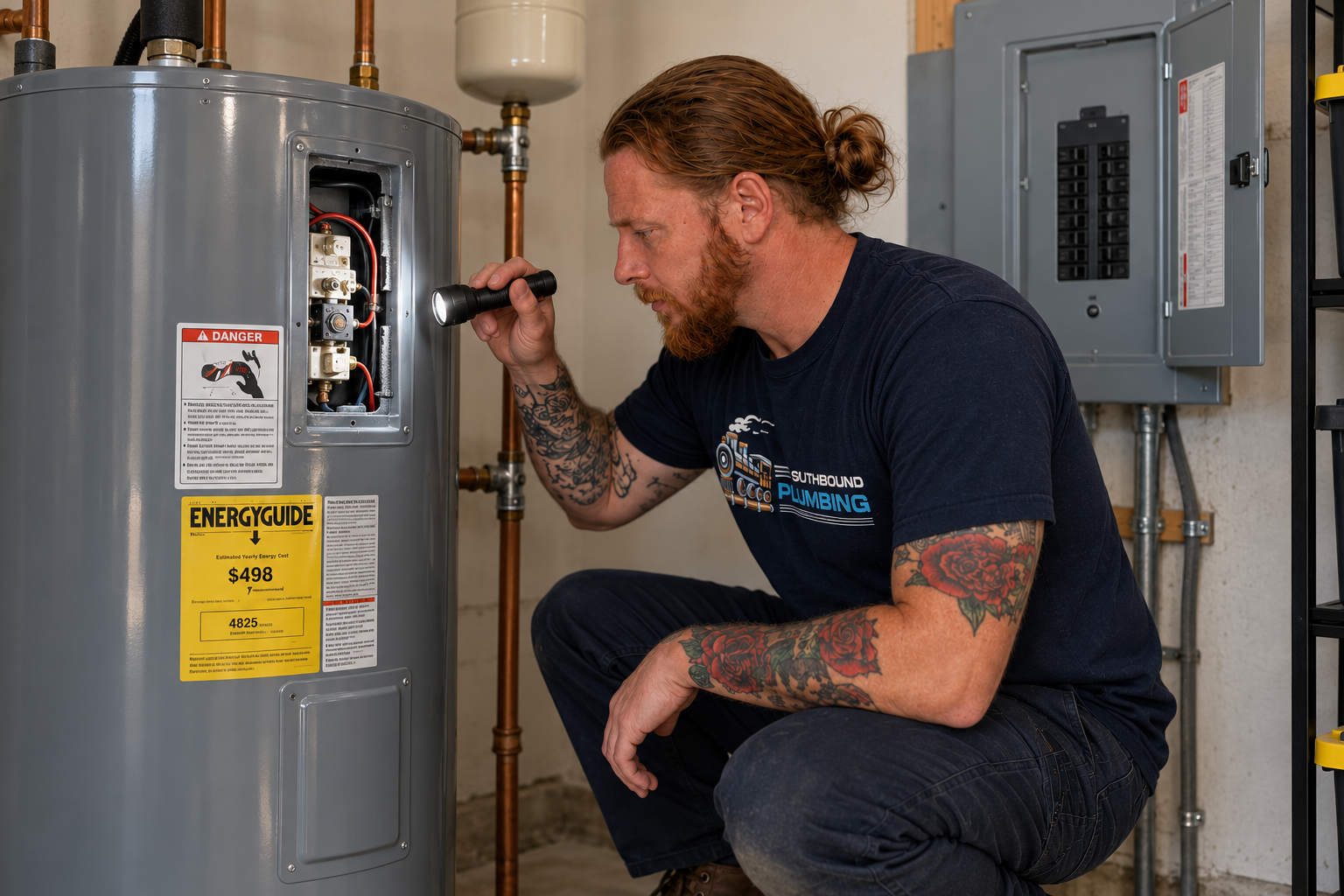
In some cases, a professional can flush and descale the tank to extend its life. But if your unit is already older and the sounds are severe, flushing often delays the inevitable by only a year or two. A licensed Huntsville plumbing company like Southbound Plumbing can inspect the unit and give you an honest assessment of whether a flush is worthwhile or whether knowing when to replace a water heater applies here.
4. You Notice Water Pooling Around the Base of the Tank
Water on the floor around your water heater is never a “wait and see” situation.
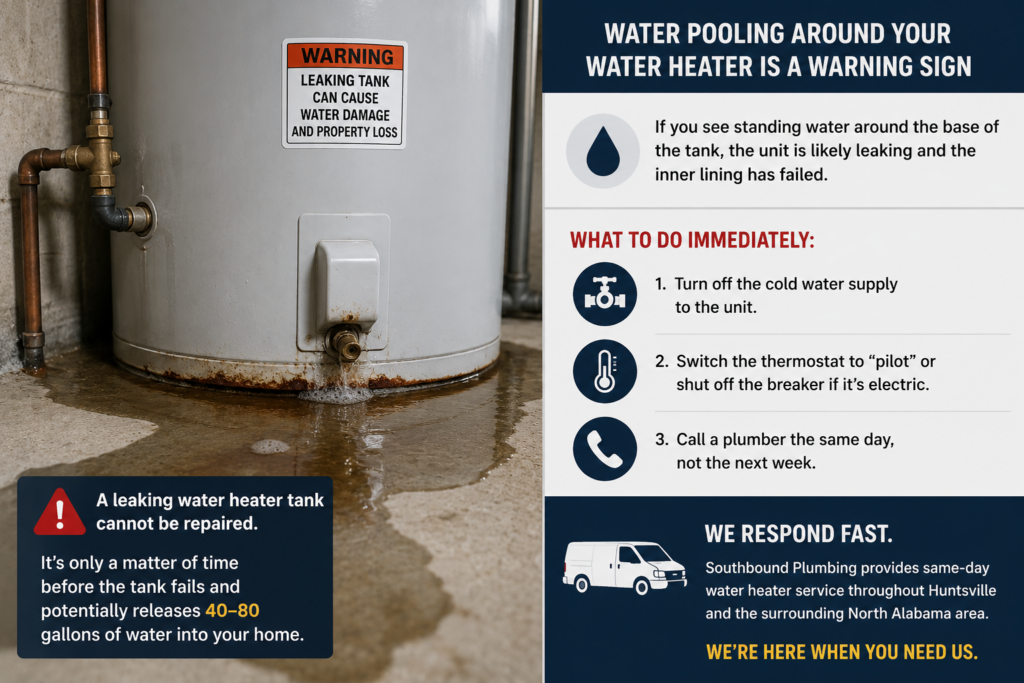
Small amounts of moisture can sometimes come from condensation or a loose fitting on the inlet or outlet pipes, both of which are fixable. But if water is consistently pooling at the base of the tank, the tank itself is likely leaking, and that means the inner lining has failed.
A leaking tank cannot be patched. The pressure and temperature inside the unit make any sealant fix temporary at best. More importantly, a tank that has begun to leak is at risk of catastrophic failure, where the bottom gives out completely and releases 40 to 80 gallons of water into your home.
If you see standing water around your water heater:
- Turn off the cold water supply to the unit immediately.
- Switch the thermostat to “pilot” or shut off the breaker if it’s electric.
- Call a plumber the same day, not the next week.
Southbound Plumbing responds to urgent water heater calls throughout Huntsville and the surrounding North Alabama area, and we can typically get to you the same day.
5. Your Hot Water Runs Out Faster Than It Used To
If your morning shower is turning cold before you’re done rinsing, or your dishwasher and washing machine can’t run at the same time without someone losing hot water, your tank may be losing recovery capacity.
ENERGY STAR recommends evaluating your water heater’s performance and age together. A unit that is both old and underperforming is nearly always a stronger candidate for replacement than repair.
This can happen for a few reasons:
- Sediment buildup reduces the effective capacity of the tank.
- A failing heating element (on electric units) can no longer heat water at the rate it once did.
- A damaged dip tube routes incoming cold water to the wrong part of the tank, mixing it with hot water prematurely.
Some of these issues are repairable. A heating element replacement, for example, is a relatively affordable fix. But if your unit is already aging and experiencing multiple symptoms at once, repair costs add up quickly. Most plumbers, including our team at Southbound Plumbing, use a simple rule of thumb: if a repair costs more than 50% of a new unit, replace it.
When to Replace a Water Heater: The Direct Answer
You should replace your water heater when it is more than 10 years old, shows signs of internal corrosion (rusty water or visible rust on the tank), is leaking from the base, makes persistent rumbling or banging sounds, or can no longer reliably meet your household’s hot water demand. Any one of these signs warrants a professional evaluation. Multiple signs together mean replacement is almost certainly the right call.
What About Tankless Water Heaters?
Tankless units heat water on demand rather than maintaining a stored tank. They last significantly longer, often 15 to 20 years, and according to the U.S. Department of Energy, can reduce water heating costs by 24 to 34 percent for homes that use 41 gallons or less of hot water daily. The upfront cost is higher, but Huntsville homeowners often find the long-term savings worthwhile, especially given the long, humid summers that keep hot water demand elevated year-round.
Our team can walk you through both options, including any current rebates and efficiency incentives available in Alabama, during any in-home estimate.
FAQs: Signs You Need a New Water Heater
What are the signs my water heater is going bad?
The most common signs of a failing water heater include rusty or discolored hot water, rumbling or popping noises during heating cycles, water pooling at the base of the tank, inconsistent hot water supply, and a unit that is more than 10 years old. If you notice two or more of these at once, schedule a professional inspection right away.
My water heater is leaking. Can it be fixed?
In most cases, no. If the leak is coming from the tank itself rather than a fitting or valve, the inner lining has already failed. Tank leaks cannot be permanently sealed. Attempting to patch a leaking tank is a short-term fix that creates long-term risk, including potential flooding of your home. Replacement is the safe and practical solution.
How many years should a water heater last?
Most tank-style water heaters last between 8 and 12 years under normal conditions. Factors like water hardness, maintenance history, and usage levels all affect lifespan. Huntsville’s water supply can contribute to faster sediment buildup in some areas, which may push units toward the lower end of that range without regular maintenance and annual flushing.
Should I repair my water heater or just get a new one?
If your water heater is under 7 years old and the repair is straightforward, fixing it often makes financial sense. If the unit is 10 years or older, a repair is often a temporary fix. A good rule of thumb: if the repair estimate exceeds 50 percent of the cost of a new unit, replacement is the smarter long-term investment.
What size water heater do I need?
For most Huntsville households, a 40-gallon tank is sufficient for 1 to 3 people, while a 50-gallon tank works better for families of 4 or more. If you’re considering a tankless unit, sizing depends on peak flow rate rather than tank capacity. A licensed plumber can assess your specific household demand and recommend the right unit for your home.
Why does my hot water smell like rotten eggs?
A sulfur or rotten egg smell in hot water usually comes from a reaction between the anode rod inside your tank and naturally occurring sulfates in the water. This can occur in parts of the Huntsville area depending on your water source. In many cases the anode rod can be replaced, but if the unit is older, full replacement is often the more cost-effective path.
Ready for a New Water Heater? Southbound Plumbing Has You Covered.
If your water heater is over 10 years old, leaking, making loud noises, or struggling to keep up with your household, Southbound Plumbing can inspect it and help you determine whether repair or replacement makes the most financial sense.
We provide same-day water heater services throughout Huntsville, Madison, and surrounding North Alabama communities.
Need an emergency plumber? Our North Alabama water heater experts will assess your current system, give you a straight answer on repair versus replacement, and get hot water back to your home fast.
Contact Southbound Plumbing today or get a free estimate online. We’ll make sure your next water heater is the right one for your home, your budget, and your family’s needs.