Key Takeaways
- Unexplained high water bills are often the first sign of a slab leak — even a small leak can waste thousands of gallons per month.
- Hot or warm spots on your floor signal a pressurized hot water line leaking beneath the slab.
- The sound of running water when all fixtures are off is a strong indicator of an active slab leak.
- Cracks in walls, floors, or your foundation can result from soil shifting caused by a slab leak underneath.
- Mold, mildew, or musty odors near baseboards or flooring often mean moisture has been building up under your home for weeks or longer.
- Huntsville homeowners should act fast: the Tennessee River-sourced water supplied by Huntsville Utilities carries minerals that accelerate pipe corrosion, making slab leaks more common here than in softer-water regions.
Quick Answers: What Are the Signs of a Slab Leak?
The most common signs of a slab leak include:
- High water bills
- Warm spots on the floor
- Running water sounds
- Cracks in walls or flooring
- Mold or musty odors
- Wet flooring or unexplained moisture
In Huntsville homes, slab leaks are especially common due to aging copper pipes, mineral-heavy water, and shifting clay soil.
If you own a home in Huntsville, Madison, or the surrounding area, your house sits on a concrete slab, and the water lines running beneath that slab are invisible until something goes wrong. Knowing the signs of a slab leak early can save you thousands of dollars in repair costs and prevent serious structural damage.
Slab leaks happen when water or sewer lines beneath your foundation develop a break or pinhole. The water has nowhere to go, so it saturates the soil, pushes up through your floor, and quietly destroys your home from the ground up. Left alone, a slab leak can crack your foundation, rot your subfloor, and create the perfect environment for mold.
Here are the five most common slab leak symptoms Huntsville plumbers see and what to do when you spot them.
Sign #1: Your Water Bill Spikes With No Explanation
Bottom line: A sudden, unexplained increase in your water bill is one of the clearest early signs of a slab leak.
If your Huntsville Utilities bill jumps significantly and nothing has changed in your household’s water use, water is escaping somewhere. A pressurized pipe leaking beneath your slab can waste hundreds of gallons per day, all of it registering on your meter while never reaching a faucet.
Here’s a simple test: Turn off every water fixture in your home, then go check your meter. If the dial or digital display is still moving, water is actively leaking somewhere in your system. That warrants a call to a licensed plumber right away.
Homes in Huntsville and Madison are especially susceptible because Huntsville Utilities water drawn from the Tennessee River system carries moderate mineral content. Over time, those minerals deposit inside copper pipes and contribute to corrosion, making pinhole leaks more likely as your plumbing ages.
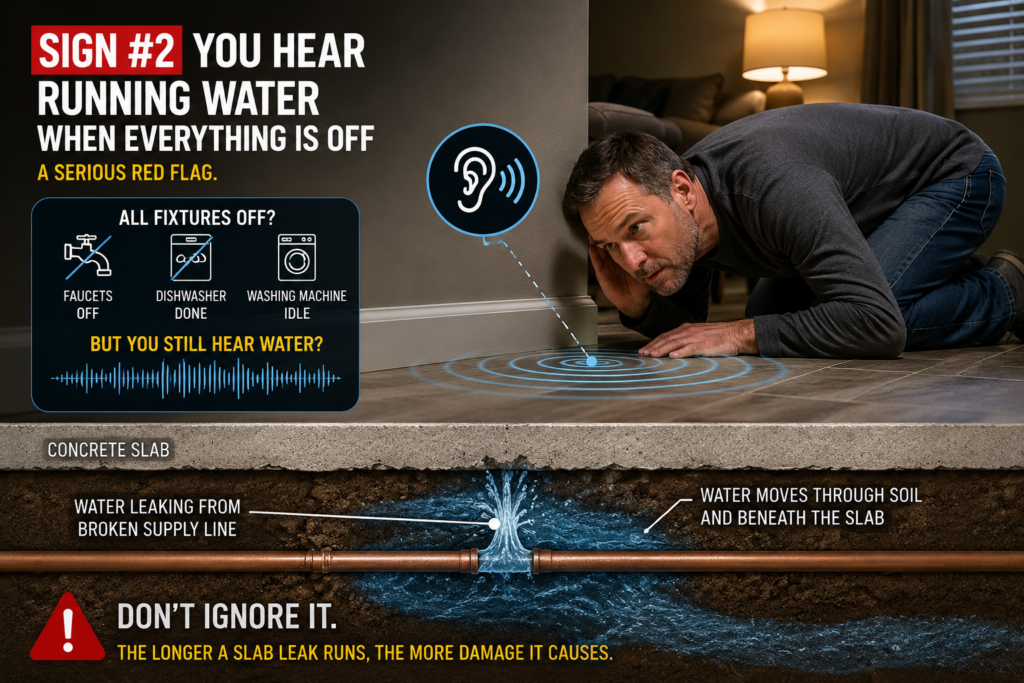
Sign #2: You Hear Running Water When Everything Is Off
Bottom line: The sound of water moving inside your walls or floors when no fixtures are on is a serious red flag.
This is one of the slab leak symptoms that homeowners often dismiss at first. You hear a faint hissing, rushing, or trickling sound, but the faucets are off, the dishwasher is done, and the washing machine is idle.
That sound is pressurized water forcing through a break in your supply line and moving through the soil or slab beneath you. It’s most audible in quiet rooms, late at night, or when you press your ear near the floor.
Do not ignore this. The longer a pressurized slab leak runs, the more saturated the soil under your foundation becomes, and saturated soil shifts.
Sign #3: Warm or Hot Spots on Your Floor
Bottom line: If one area of your floor feels noticeably warmer than the rest, you likely have a hot water line leaking below the slab.
This is one of the most reliable physical signs of a slab leak, and it shows up on tile, hardwood, and even carpet. A break in your hot water supply line releases heated water directly beneath your flooring. That heat transfers upward and creates a localized warm zone you can feel when you walk across the room.
Walk barefoot across your floors especially in bathrooms, kitchens, and hallways where supply lines typically run. A warm patch the size of a dinner plate or larger, with no other heat source nearby, is a strong indicator.
In older Huntsville neighborhoods like Jones Valley or Hampton Cove, copper piping installed decades ago can develop hot spots more frequently as the pipe walls thin from corrosion.
Sign #4: Cracks in Your Walls, Floors, or Foundation
Bottom line: New or widening cracks in your slab, walls, or flooring can mean a slab leak is destabilizing the soil beneath your foundation.
Concrete cracks for many reasons, but cracks that appear suddenly or grow quickly deserve attention. When water leaks beneath your slab, it saturates and erodes the soil underneath. As that soil shifts or washes away, your foundation loses its support and begins to move.
Watch for:
- Cracks running diagonally from window or door corners
- Gaps opening between your walls and ceiling
- Floors that start to feel uneven or bouncy
- Tile grout cracking or tiles popping loose without obvious impact
These structural warning signs don’t always mean a slab leak, but when you see them alongside other symptoms on this list like rising water bills, warm floors, or the sound of running water, the combination points strongly toward a leak beneath your slab.
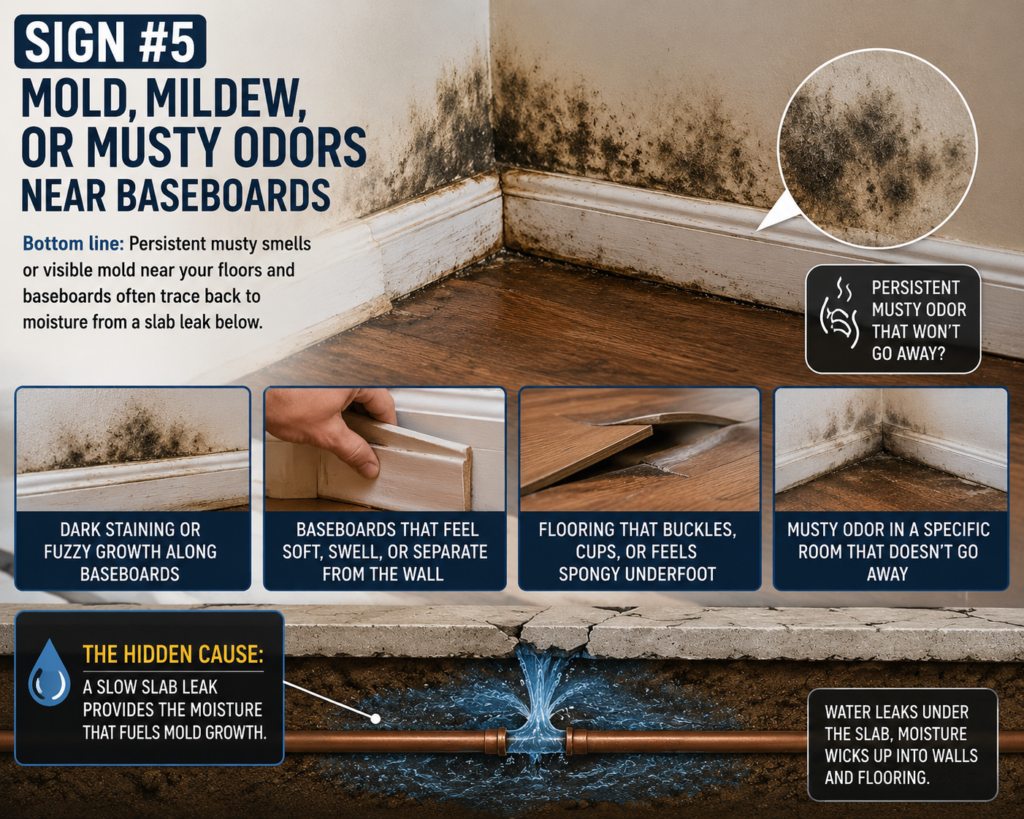
Sign #5: Mold, Mildew, or Musty Odors Near Baseboards
Bottom line: Persistent musty smells or visible mold near your floors and baseboards often trace back to moisture from a slab leak below.
Mold needs three things: moisture, warmth, and organic material. Your flooring, drywall, and subflooring provide the last two. A slow slab leak provides the first, silently and continuously.
By the time mold becomes visible or the smell becomes obvious, the leak has usually been active for weeks. You may notice:
- Dark staining or fuzzy growth along the bottom of your drywall
- Baseboards that feel soft, swell, or separate from the wall
- Flooring that buckles, cups, or feels spongy underfoot
- A persistent musty odor in a specific room that doesn’t go away with cleaning or ventilation
Huntsville’s warm, humid summers make mold growth even faster once moisture enters the equation. If you’re seeing these signs in a room with no obvious water source above (no leaking roof, no plumbing fixture on an upper floor), look below.
How to Tell If You Have a Slab Leak: A Quick Self-Check
If you suspect a slab leak, run through this checklist before calling a plumber:
- Check your water bill for any unexplained increases over the past 1 to 3 months.
- Turn off all water fixtures and check your meter. Movement means an active leak.
- Walk your floors barefoot and feel for warm or wet spots.
- Listen near the floor in quiet areas for hissing or running water sounds.
- Inspect baseboards and lower walls for staining, softness, or mold.
- Look at your slab and floors for new cracks or shifting tile.
If two or more of these checks come back positive, call a licensed plumber who specializes in slab leak detection. Do not delay, water damage compounds quickly.
Why Huntsville Homes Are Particularly Vulnerable
Slab leaks can happen anywhere, but several factors put Huntsville-area homes at higher risk.
Pipe Age
Many neighborhoods in South Huntsville, Monte Sano, and Downtown Huntsville have homes built in the 1960s through 1980s with original copper plumbing. Copper has a lifespan, and older pipes are more prone to pinhole leaks.
Water Mineral Content
Huntsville Utilities draws from the Tennessee River system. That water carries dissolved minerals that deposit inside pipes over years of use, thinning pipe walls and increasing the risk of corrosion-related leaks.
Soil Movement
North Alabama’s clay-heavy soil expands and contracts with seasonal moisture changes. That movement puts stress on pipes running beneath your slab, especially at joints and bends.
High Water Pressure
Homes in elevated areas around Green Mountain or Chapman Mountain can sometimes experience higher than ideal pressure, which accelerates wear on supply lines over time.
FAQs
What does a slab leak sound like?
A slab leak often sounds like a faint hissing, dripping, or rushing water coming from beneath your floor. You’re most likely to hear it in a quiet room when all fixtures are turned off. If you press your ear near the floor and can hear water moving, contact a licensed plumber for a professional leak detection inspection.
How much does slab leak repair cost in Huntsville, Alabama?
Slab leak repair costs in Huntsville typically range from $500 to $4,000 or more depending on the location of the leak, the repair method used, and how much concrete must be removed. Trenchless or rerouting methods can sometimes reduce the cost and disruption. Always get a written estimate before work begins.
Can a slab leak cause foundation damage?
Yes. A slab leak that goes unrepaired allows water to continuously saturate the soil beneath your foundation. As that soil erodes or shifts, your foundation loses support and can crack, settle unevenly, or heave. Catching a slab leak early significantly reduces the risk of long-term structural damage to your home.
How do plumbers detect a slab leak?
Licensed plumbers use several non-invasive detection methods including electronic listening equipment, thermal imaging cameras, and pressure testing. These tools allow a trained technician to pinpoint the location of a leak beneath the slab without cutting through your floor, saving time and limiting damage to your home.
Will my homeowner’s insurance cover a slab leak in Alabama?
It depends on your specific policy. Most standard homeowner’s insurance policies in Alabama cover sudden and accidental water damage but exclude damage caused by slow leaks or gradual deterioration. Review your policy’s water damage exclusions and contact your insurance agent quickly after a slab leak is confirmed.
Can I ignore a slow slab leak if my water pressure seems fine?
No. A slow slab leak can cause significant damage over weeks and months even when water pressure at your fixtures feels normal. The leak is happening in the pressurized line before it reaches your faucets. By the time you notice pressure changes, mold growth or foundation damage may already be underway.
How long does it take to repair a slab leak?
Most slab leak repairs in Huntsville take one to three days depending on the method. Spot repairs through the slab can sometimes be completed in a single day. Full pipe rerouting, which avoids cutting through concrete entirely, typically takes two to three days. Your plumber should give you a clear timeline upfront.
Suspect a Slab Leak in Your Huntsville Home? Call Southbound Plumbing.
Southbound Plumbing’s licensed plumbers serve Huntsville, Madison, Meridianville, Harvest, and Owens Cross Roads. We use professional-grade leak detection equipment to locate slab leaks accurately before recommending any repair so you never pay for guesswork.
If you’ve noticed a spike in your Huntsville Utilities bill, warm spots on your floor, or the sound of water running when everything is off, don’t wait. Slab leaks get worse fast, and early detection almost always means a faster, less expensive repair.
Call Southbound Plumbing today or get a free estimateonline. Southbound Plumbing also offers 24/7 emergency plumbing services.