If your drains are backing up again and you just cleared them two months ago, something is wrong beyond a surface-level clog. Huntsville homeowners deal with a specific combination of older cast iron pipe systems, hard water mineral buildup, and seasonal tree root intrusion that makes recurring clogs more common here than in newer suburban developments. Drain cleaning in Huntsville, AL is not a one-size-fits-all fix, and most homeowners waste money on temporary solutions because they never identify the actual cause. This breakdown covers exactly what is happening inside your pipes and what to do about it.
Table of Contents
- Quick Takeaways
- Why Drains Clog Repeatedly Instead of Just Once
- The Real Causes Behind a Kitchen Drain Clog
- Bathroom Drain Backup: What the Gunk Is Actually Made Of
- When You Need Sewer Line Cleaning in Huntsville, Not Just a Drain Snake
- DIY Drain Fixes vs. Professional Drain Cleaning: What Actually Works
- Huntsville-Specific Pipe Problems That Make Clogs Worse
- Comparing Drain Cleaning Methods
- Frequently Asked Questions
- References
Quick Takeaways
| Key Insight | Explanation | |
|---|---|---|
| Recurring clogs signal a systemic problem | If the same drain clogs more than twice a year, the issue is usually pipe buildup, root intrusion, or improper slope, not just debris accumulation. | |
| Grease does not go down the drain safely | Cooking grease solidifies inside pipes at room temperature, coating walls and trapping food particles. Even with hot water running, grease still sticks. | |
| Chemical drain cleaners can damage cast iron pipes | Many older Huntsville homes have cast iron drain lines. Caustic chemical cleaners accelerate corrosion, making the problem worse over time. | |
| Hair is the primary bathroom drain clog culprit | A single shower produces enough hair to partially restrict flow. Over weeks, hair binds with soap scum and becomes nearly solid inside the drain. | |
| Tree roots enter sewer lines through tiny cracks | Mature trees near sewer lines are common in Hampton Cove and Owens Cross Roads neighborhoods. Root intrusion can fully block a sewer line within one season. | |
| Multiple slow drains at once means a main line issue | If your kitchen sink, bathroom sink, and tub are all draining slowly at the same time, the problem is in your main sewer line, not individual branch lines. | |
| A recurring clog usually needs professional-grade equipment | Hand snakes and store-bought tools reach a fraction of the distance and cutting power that a licensed plumber’s motorized equipment does. |
Why Drains Clog Repeatedly Instead of Just Once
The most common reason a drain clogs again shortly after being cleared is that the underlying cause was never addressed. A plumber’s snake or a bottle of Drano removes the immediate blockage but leaves behind the pipe conditions that created it. Recurring clogs are a symptom, not the problem itself.
In practice, when a homeowner calls Southbound Plumbing about a drain that has been cleared three times in the past year, the underlying cause is almost always one of three things: heavy grease or soap scum coating the pipe walls, an offset or cracked pipe joint that traps debris, or root tendrils that have regrown after a previous snaking. None of these issues are resolved by a quick, surface-level snake job.
The data consistently shows that pipe buildup is gradual and cumulative. A pipe that drains slowly today will be fully blocked within weeks if the buildup is not removed completely. Spot-treating a clog without addressing the surrounding pipe condition is like wiping one spot on a dirty window. The flow might improve temporarily, but the restriction remains.
Pro tip: If your drain has clogged more than twice in a 12-month period, ask for a camera inspection rather than another basic snake job. The camera footage will show exactly what is causing the problem and save you money on repeated service calls.
The Real Causes Behind a Kitchen Drain Clog
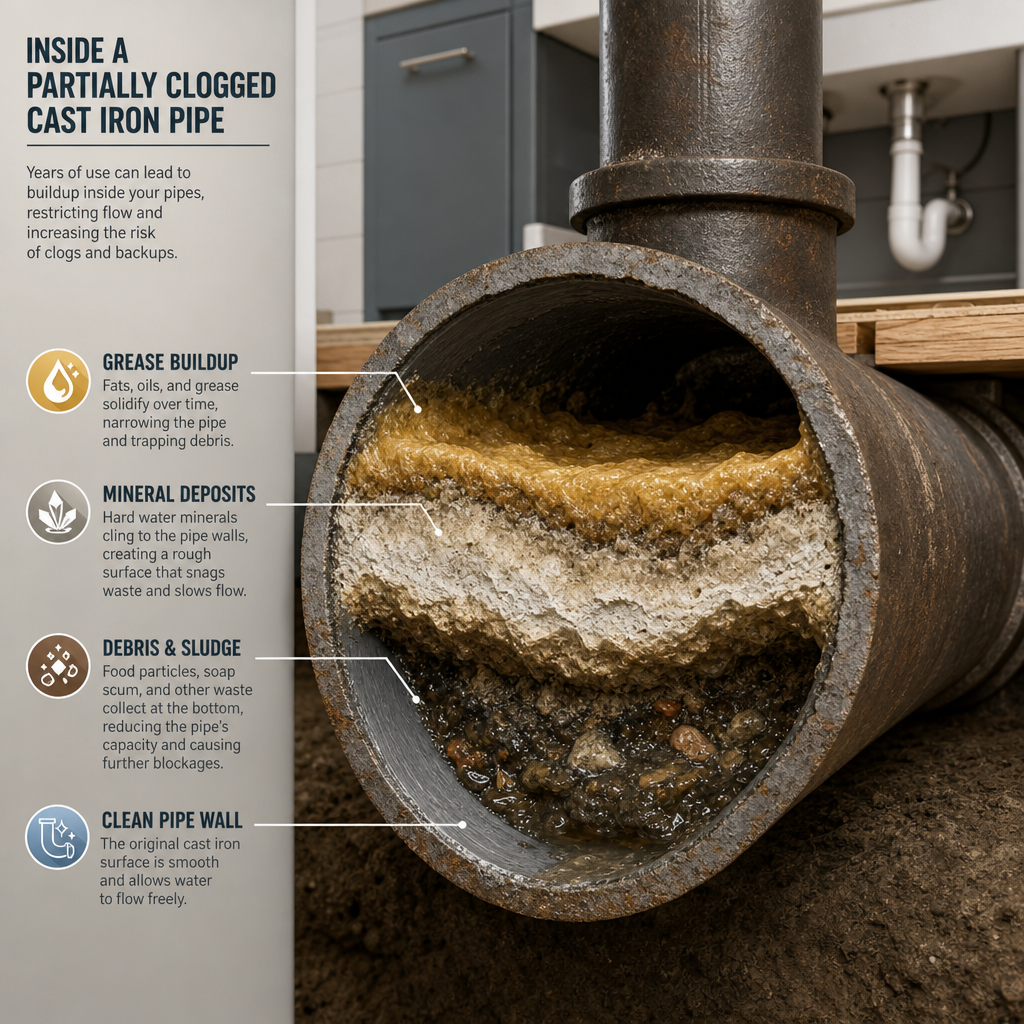
Kitchen drains fail for predictable reasons, and almost all of them come down to what gets poured or pushed down the drain over months and years. A kitchen drain clog in a Huntsville home is almost always a grease, food particle, or soap buildup issue, and sometimes a combination of all three.
Grease Accumulation Inside Pipe Walls
Cooking grease, bacon drippings, butter, and even olive oil do not stay liquid once they travel a few feet down a drain line. They cool rapidly and stick to the interior pipe wall. Over months, this layer thickens and the effective diameter of the pipe shrinks. Food particles, coffee grounds, and soap residue then adhere to the grease layer, and the restriction compounds quickly.
A common mistake is running hot water while pouring grease down the drain. Hot water does thin grease temporarily, but it only pushes the grease further down the pipe where it cools and solidifies in a section that is harder to access for cleaning.
Garbage Disposal Myths That Cost You Money
Many homeowners assume a garbage disposal means anything can go down the sink. It does not. Fibrous vegetables like celery, artichokes, and corn husks wrap around disposal blades and create dense pulp that coats the drain line. Eggshells produce a fine, sandy paste. Pasta and rice absorb water and expand inside the pipe, creating soft but stubborn blockages.
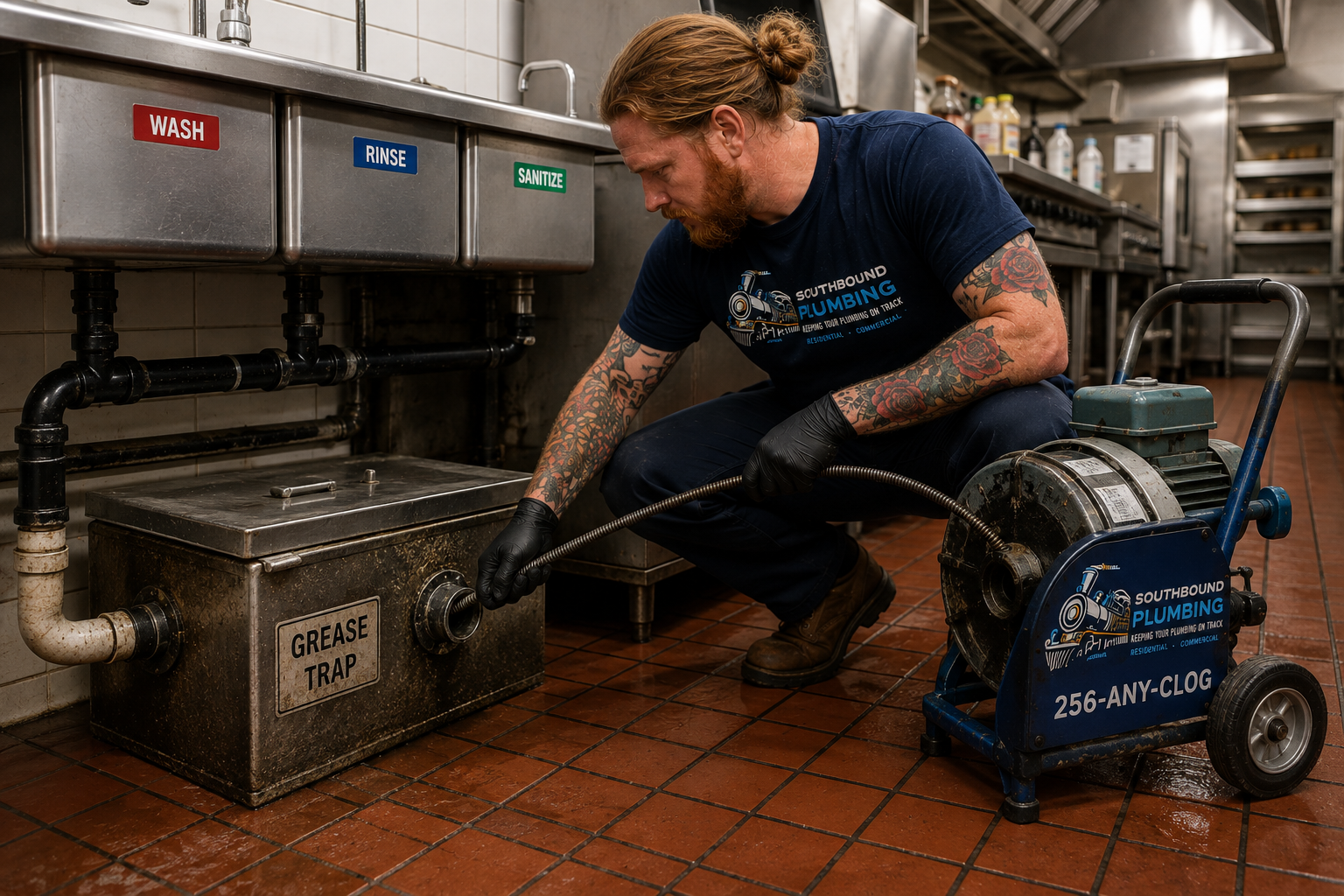
Commercial kitchens and restaurant owners in Madison County deal with this at scale. A single busy kitchen can generate enough grease and food waste to require professional drain cleaning every 60 to 90 days without a functioning grease interceptor.
Pro tip: Run cold water, not hot, when using your garbage disposal. Cold water keeps grease solidified so it passes through the disposal as a solid rather than a liquid that recoats the pipe wall further down the line.
Bathroom Drain Backup: What the Gunk Is Actually Made Of
A bathroom drain backup is almost always hair, soap scum, and mineral deposits working together. Each element alone would drain slowly. Combined, they form a dense, almost rubbery mass that a standard plunger cannot dislodge effectively.
Hair Binding With Soap Scum
Hair does not dissolve. It accumulates on the stopper, drain cover, and pipe walls over every shower and bath. Soap scum, which is the residue formed when soap reacts with hard water minerals, acts as a binding agent. Within a few weeks, a loose collection of hair strands becomes a compacted plug.
Huntsville’s water supply contains moderate mineral hardness. According to the Huntsville Utilities water quality data, municipal water in this area carries calcium and magnesium levels sufficient to produce noticeable soap scum buildup in pipes. That buildup accelerates hair clogs significantly compared to what homeowners might experience in areas with softer water.
Slow Toilet Drains Are a Different Problem
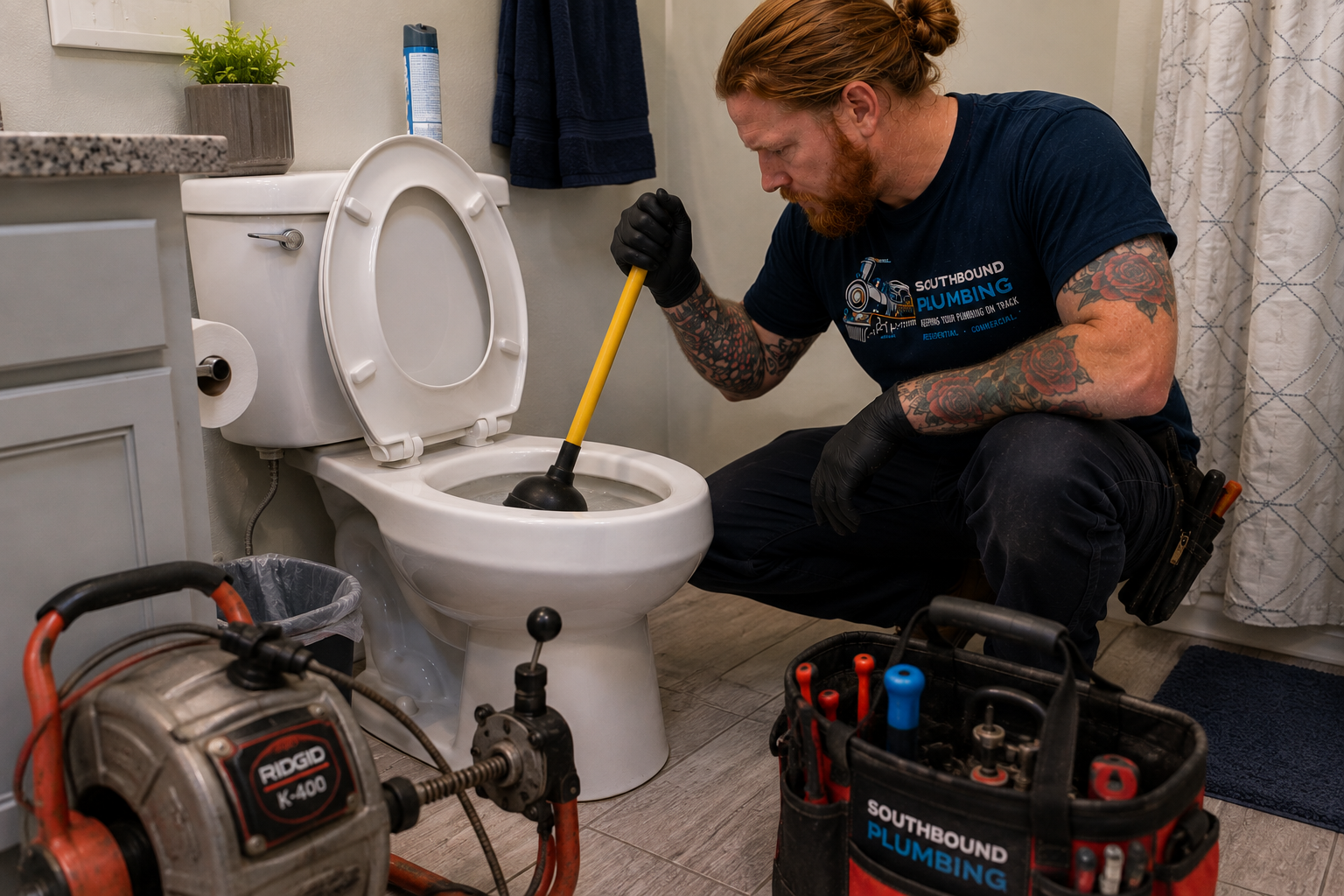
A slow-draining toilet is not usually a hair clog. In older Huntsville homes, slow toilets are most often caused by partial blockages from non-flushable wipes, mineral scale inside the toilet trapway, or a partial obstruction in the branch drain line. These require different tools and techniques than a standard bathroom sink backup.
“The number one mistake homeowners make is treating a slow toilet the same way they treat a slow sink. A plunger handles neither effectively when the real blockage is 10 feet down the line.” — Southbound Plumbing, Master Plumber, Huntsville AL (License #MP4724)
When You Need Sewer Line Cleaning in Huntsville, Not Just a Drain Snake
Sewer line cleaning in Huntsville becomes necessary when individual drain treatments stop producing lasting results, or when multiple fixtures show problems simultaneously. The sewer main is the single pipe that carries waste from your entire home to the city connection or septic system. When it restricts, every drain in the house is affected.
Signs Your Main Line Is the Problem
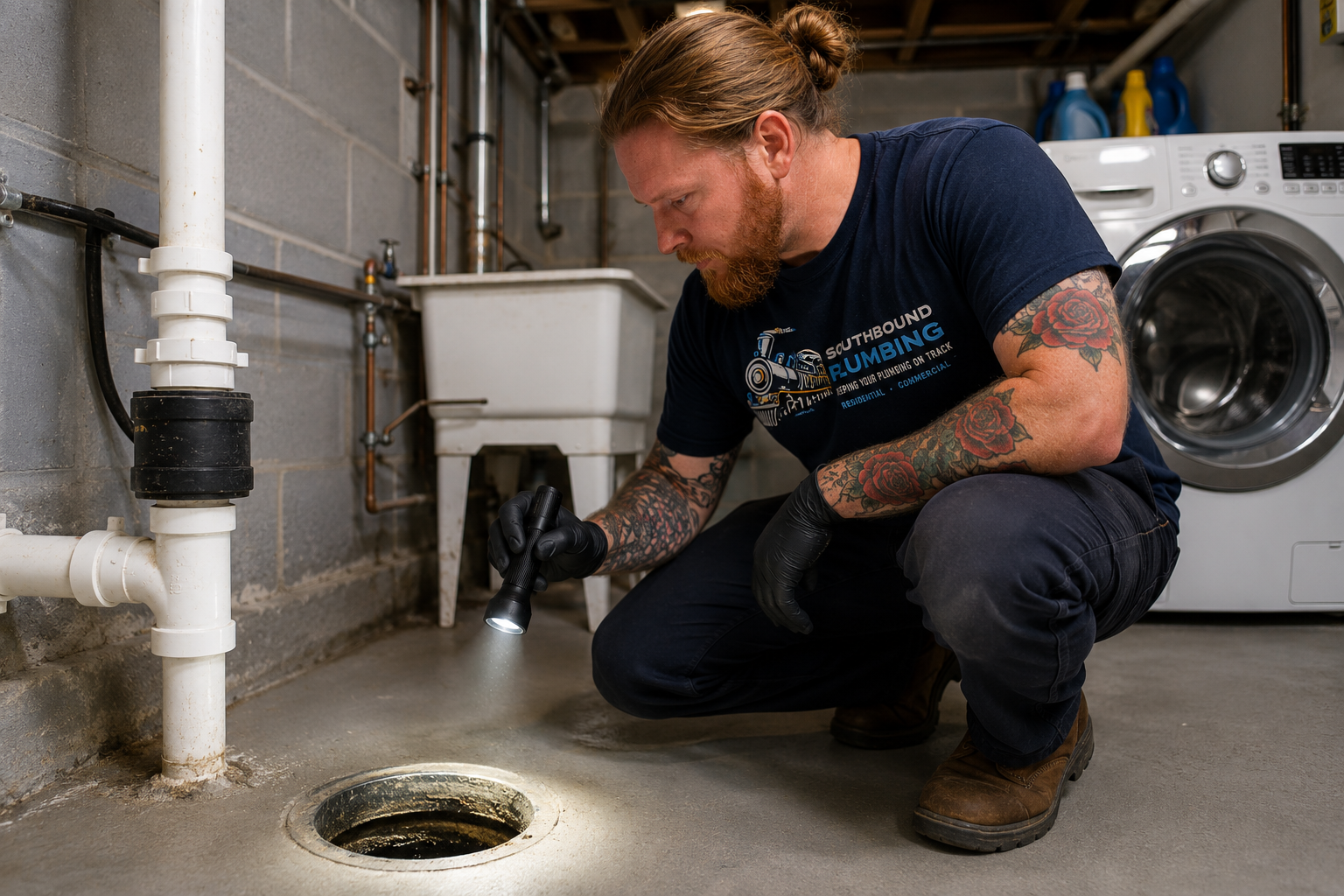
The clearest indicator of a main line blockage is when two or more unrelated fixtures back up at the same time. If flushing the toilet causes the bathtub to gurgle, or if running the kitchen sink causes water to appear in the basement floor drain, the problem is downstream of all those individual fixtures, which means the main sewer line.
Gurgling sounds from drains are caused by air displacement. When a main line is restricted, water trying to pass through the blockage displaces air back up through nearby drain openings. This is not a small issue. Left unaddressed, a main line restriction leads to sewage backup inside the home, which is a health hazard and a much more expensive repair.
Tree Root Intrusion in Hampton Cove and Owens Cross Roads
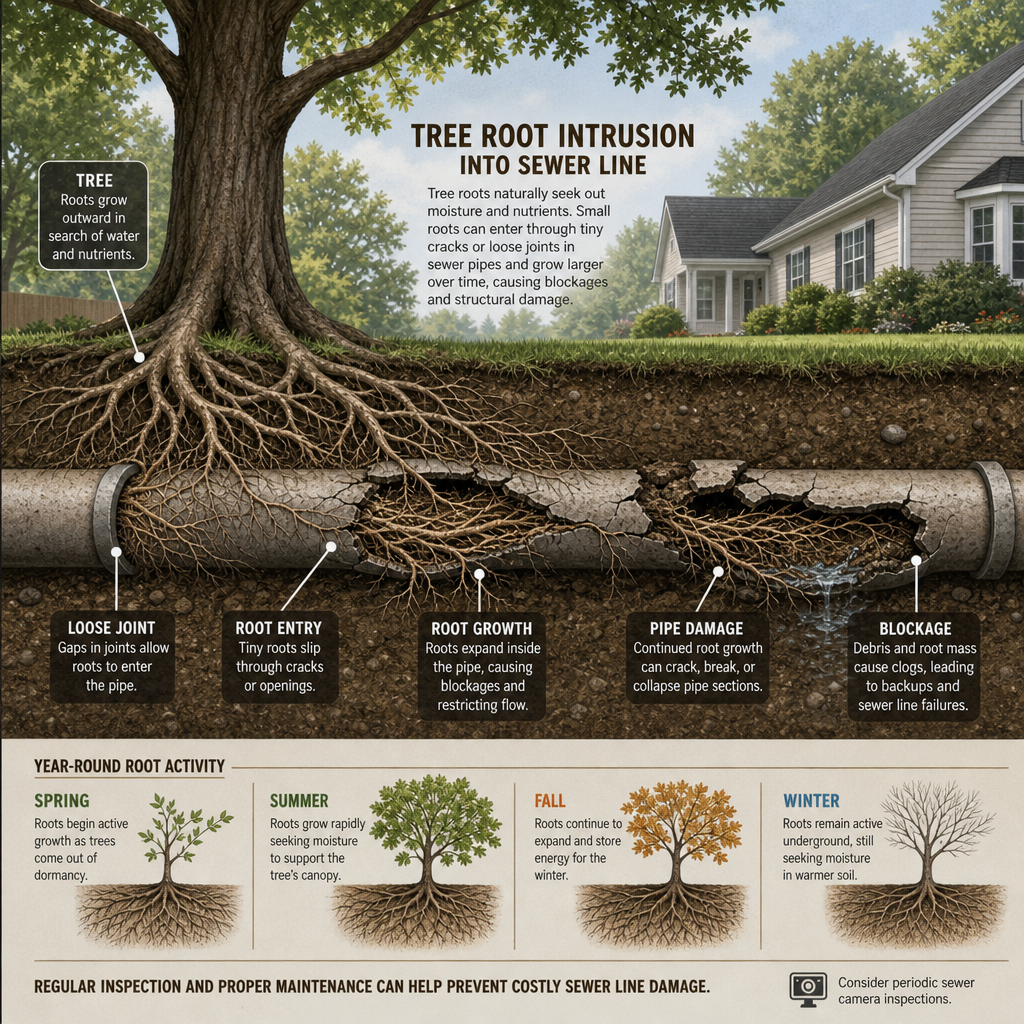
Established neighborhoods in Hampton Cove and Owens Cross Roads have mature landscaping with large root systems. Tree roots seek moisture and will find hairline cracks in older clay or cast iron sewer pipes. Once inside, roots grow rapidly and can fully block a 4-inch sewer line within one growing season.
A basic hand snake can cut roots back temporarily, but without clearing the full root mass, regrowth happens within months. A licensed plumber working with heavier, motorized rooter equipment can cut through root intrusion more thoroughly and reach further down the line than a store-bought snake, which is why repeat root problems call for a professional service call rather than another DIY attempt.
DIY Drain Fixes vs. Professional Drain Cleaning: What Actually Works
There is a place for DIY drain maintenance and a place where it ends. Knowing the boundary saves Huntsville homeowners significant money and prevents accidental pipe damage.
What DIY Methods Actually Accomplish
A drain strainer or hair catcher placed over a shower drain is genuinely effective at preventing hair clogs from forming. This is the single most cost-effective drain maintenance tool available. Cleaning the strainer once a week takes 30 seconds and eliminates the most common bathroom drain backup.
Baking soda and hot water flushes help with minor soap buildup in bathroom sinks. This is a maintenance flush, not a clog treatment. It works because baking soda is a mild abrasive and hot water softens soap residue. It does absolutely nothing for a hair clog, a grease blockage, or any restriction deeper than 12 inches in the drain line.
Where Chemical Drain Cleaners Fail and Cause Damage
Chemical drain cleaners like those containing sodium hydroxide (lye) generate heat when they contact water. In plastic PVC pipes, this heat softens joints and can cause leaks. In older cast iron pipes, the caustic chemistry accelerates corrosion at existing rust points. The data from plumbing industry inspections consistently shows that homes with a history of heavy chemical cleaner use have more pipe deterioration than homes of similar age that avoided them.
Chemical cleaners also rarely dissolve the full blockage. They create a channel through a soft clog, producing the illusion of a fix. The remaining debris continues to accumulate and the drain backs up again within weeks. This cycle is exactly what many national chain services like Roto-Rooter and Mr. Rooter depend on: repeated service calls for the same unresolved problem.
Pro tip: Skip the chemical drain cleaners entirely. Use a drain strainer to prevent buildup, use a hand-operated drain snake for minor clogs within 12 inches of the drain opening, and call a licensed plumber when the problem recurs or when multiple drains are affected simultaneously.
Huntsville-Specific Pipe Problems That Make Clogs Worse
Huntsville’s housing stock spans from mid-century neighborhoods near downtown to newer developments in Madison and Owens Cross Roads. The pipe materials and layouts vary significantly by era, and each creates its own clog challenges.
Cast Iron Pipes in Older Huntsville Homes
Homes built before 1980 in Huntsville frequently have cast iron drain and sewer lines. Cast iron is durable, but it corrodes from the inside over decades. The rough, corroded interior surface catches debris far more readily than smooth PVC pipe. What might take years to become a problem in a newer home can clog in months in a cast iron system with significant interior corrosion.
Southbound Plumbing works with both cast iron and PVC systems regularly. Cast iron lines require a gentler touch than PVC, since aggressive cabling or the wrong cutting head can crack already-corroded pipe walls. This is one reason why hiring a plumber with specific experience in older pipe systems matters. A technician unfamiliar with aged cast iron can cause pipe damage while trying to clear it.
Hard Water Mineral Deposits Throughout Madison County
Hard water is not unique to Huntsville, but it is a real contributing factor to drain restriction here. Calcium and magnesium deposits build up on the interior of drain lines, reducing diameter over time. This is especially pronounced in hot water lines and at pipe joints where flow slows and minerals precipitate out. In combination with soap scum and hair, mineral scale creates a compounding restriction that worsens faster than any single factor would on its own.
Comparing Drain Cleaning Methods
| Method | What It Removes | Limitations and Risks |
|---|---|---|
| Manual Drain Snake (Augering) | Soft clogs within 20-25 feet of the drain opening, hair tangles, loose debris | Punches a hole through the clog but leaves buildup on pipe walls; does not address root intrusion or scale |
| Chemical Drain Cleaners | Soft organic matter like soap scum and minor hair tangles in accessible drain sections | Damages cast iron through corrosion, softens PVC joints, rarely removes full blockage, temporary fix only |
| Professional Motorized Snaking / Rooter Service | Heavier clogs, tree roots, and blockages further down the line than a hand snake can reach | Clears a path through the blockage rather than the full pipe wall; buildup on pipe walls can still require repeat service over time |
For a residential home in Huntsville dealing with repeated kitchen or bathroom drain backups, a professional-grade motorized snake reaches further and cuts through tougher blockages than anything sold at a hardware store, which is why a licensed plumber’s service call typically outlasts a DIY attempt.
For commercial accounts, restaurants, and property managers in Madison County, a scheduled professional drain cleaning service keeps high-volume drain systems functional without constant emergency calls. The cost of routine maintenance calls is consistently lower than the cost of emergency drain backup situations in a commercial kitchen.
Frequently Asked Questions
How often should I have my drains professionally cleaned in Huntsville?
For a typical residential home in Huntsville, professional drain cleaning once every 18 to 24 months is a reasonable maintenance interval. Homes with older cast iron pipes, large trees near sewer lines, or households with multiple people should consider annual cleaning. Commercial kitchens and restaurants should schedule drain cleaning every 60 to 90 days depending on volume.
What is the difference between a clogged drain and a sewer line problem?
A clogged drain affects one fixture. A sewer line problem affects multiple fixtures simultaneously or causes backups in low-lying drains like floor drains and tub drains when other fixtures are used. If flushing your toilet causes your bathtub to back up, that is a sewer line issue, not a single drain clog, and it needs immediate professional attention.
Can I use Drano or similar products on my Huntsville home’s drain lines?
You can, but you should not. In PVC pipes, the heat generated by chemical cleaners can soften joints and cause slow leaks. In older cast iron systems, which are common in Huntsville homes built before 1980, caustic drain cleaners accelerate corrosion and shorten pipe lifespan. A hand drain snake or a licensed plumber is always the better option.
Why does my drain smell bad even when it is not clogged?
Drain odors without a visible backup are usually caused by biofilm buildup on pipe walls, a dry P-trap that is no longer blocking sewer gas, or decomposing debris caught in the drain hardware itself. Cleaning the drain stopper and flushing the P-trap with water resolves most odor issues. Persistent sewer gas smells that come from multiple drains warrant a plumber inspection since they can indicate a venting issue or a cracked sewer line.
How do plumbers clear tree roots from a sewer line?
Licensed plumbers use motorized rooter equipment with rotating cutting heads to cut through root intrusion and clear a path through the line. This reaches further and cuts more effectively than a hand-operated snake, though severe root damage to the pipe itself may call for repair rather than repeated cutting.
What should I do if multiple drains in my home back up at the same time?
Stop using all water-based fixtures immediately and call a licensed plumber. Do not run the dishwasher, washing machine, or any sink. When the main sewer line is blocked, every gallon of water you use has to go somewhere, and that somewhere becomes your lowest drain point, usually the floor drain, bathtub, or toilet. A main line backup can cause sewage to surface inside the home within minutes of continued water use.
Have you dealt with a stubborn drain clog in your Huntsville home that kept coming back? Give Southbound Plumbing a call!
Have you dealt with a stubborn drain clog in your Huntsville home that kept coming back? Give Southbound Plumbing a call!
References
- U.S. Environmental Protection Agency guidance on household drain maintenance and wastewater system care
- Centers for Disease Control and Prevention information on sewage backup health risks and sanitation
- Statista data on plumbing services industry size, service frequency trends, and homeowner maintenance spending
- Forbes coverage of home maintenance costs, plumbing repair expenses, and when to hire a professional plumber
- U.S. Department of Energy resources on water heater efficiency and household water system maintenance