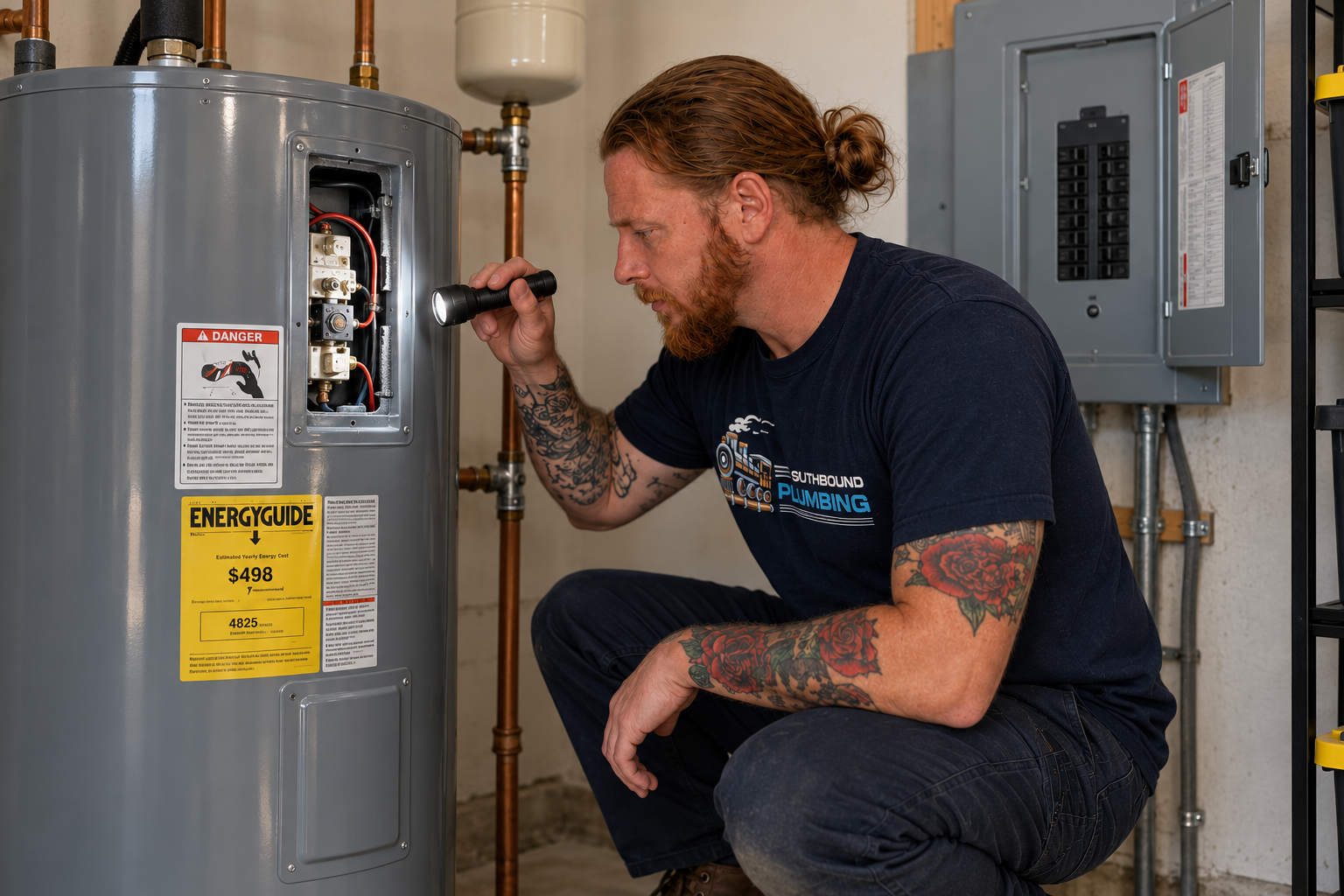
A water heater that suddenly starts making noise can be alarming, especially if it happens in the middle of the night or right before a shower. The good news is that most water heater noises are not an emergency. The type of sound is usually a fairly reliable clue to what is actually going on. In general, popping or rumbling points to sediment buildup, ticking or clicking points to normal expansion and contraction, screeching or whistling points to a valve issue, and loud banging points to water hammer somewhere in the line.
Key Takeaways
- Most water heater noises are not an emergency, but the type of sound points to a specific, identifiable cause.
- Popping or rumbling usually means sediment buildup, which is common with Huntsville’s harder water.
- Light ticking or clicking is typically normal expansion and contraction and not a cause for concern alone.
- Screeching or whistling often points to a partially closed or failing valve.
- Loud banging is usually water hammer elsewhere in the system, not the water heater itself, and can loosen connections over time if ignored.
Popping or Rumbling: Sediment Buildup
This is by far the most common water heater noise, and it is usually caused by sediment that has settled at the bottom of the tank. As water heats, it moves through and around that sediment layer, creating small pockets of steam that pop as they escape. Over time, this buildup also makes the water heater work harder to heat the same amount of water, which shows up as a slow increase in energy costs.
Huntsville’s water tends to run harder than average, which speeds up this kind of mineral buildup. Flushing the tank on a regular schedule, generally once a year, can prevent sediment from accumulating to the point where it causes noise or reduces efficiency.
Ticking or Clicking: Normal Expansion and Contraction
As metal components inside and around the tank heat up and cool down, they expand and contract slightly, which can create a light ticking sound. This is typically nothing to worry about on its own. It becomes worth a closer look only if it is paired with other symptoms, like inconsistent water temperature or visible moisture around the base of the unit.
Screeching or Whistling: A Valve Issue
A high-pitched screeching or whistling sound often points to a valve that is partially closed or beginning to fail, most commonly the shutoff valve on the cold water supply line. If a valve is not fully open, water gets forced through a narrower opening than it should, creating that whistling sound. This is worth checking and adjusting, since a partially closed supply valve can also affect water pressure throughout the house.
Loud Banging: Water Hammer
A sudden, sharp bang, sometimes strong enough to feel through the pipes, usually is not the water heater itself but rather water hammer somewhere in the plumbing system. This happens when a valve closes quickly and the moving water has nowhere to go, creating a pressure spike that slams against the pipe. Repeated water hammer can loosen pipe connections and cause leaks over time if it is not addressed.
When a Noisy Water Heater Needs a Plumber
Sediment buildup and normal expansion sounds are usually something that can wait for a scheduled service call. A screeching valve, a banging sound that keeps happening, or any noise paired with visible leaking, rust-colored water, or a pilot light that will not stay lit is worth calling in sooner rather than later.
Frequently Asked Questions About Water Heater Noise
Is it normal for a brand new water heater to make any noise?
A new water heater may make very light sounds as it heats up for the first time, but it should not be popping, rumbling, or banging. Any pronounced noise from a new unit is worth having checked, since it could point to an installation issue rather than normal wear.
How often should a water heater actually be flushed?
Once a year is a reasonable general guideline for most homes, though homes with harder water may benefit from flushing more frequently. Flushing removes sediment before it builds up enough to cause noise or reduce efficiency.
Can a noisy water heater actually be dangerous?
In most cases, no, but it depends on the cause. A pressure relief valve that is whistling or a tank that is banging in combination with other warning signs should not be ignored, since these can occasionally point to a pressure buildup issue that is worth having a professional evaluate.
Will flushing the tank myself fix the noise?
In many sediment-related cases, yes, though it depends on how much buildup has accumulated and the condition of the tank. If flushing does not resolve the noise, or if the noise is a screech or bang rather than a pop or rumble, it is worth having a plumber take a closer look.
Bottom Line
A noisy water heater is usually trying to tell you something specific rather than signaling an emergency. Matching the sound to its likely cause is the fastest way to know whether it is a simple maintenance item or something that needs a professional look.