If your toilet or floor drain backs up every time it rains hard, that is not a coincidence, and it is not something to ignore. A sewer line that backs up specifically during or after heavy rain points to a fairly identifiable set of causes. In most cases, rain-triggered sewer backups happen because of inflow and infiltration into aging sewer lines, tree root intrusion that restricts flow, or municipal lines that become overwhelmed during heavy storms. The first two are typically homeowner-side issues, while the third is a city-side issue, and telling them apart matters for figuring out who needs to fix it.
Key Takeaways
- A sewer backup that happens specifically during or after heavy rain usually has an identifiable, specific cause.
- Inflow and infiltration through cracked older pipe is common in Huntsville’s established neighborhoods.
- Tree root intrusion often shows up only during heavy rain, when a partial blockage becomes a full bottleneck.
- Backups affecting multiple homes during the same storm usually point to a municipal-side issue rather than your own line.
- Stop using water in the house immediately if a backup occurs, and avoid repeated flushing while it is happening.
Inflow and Infiltration Into Aging Lines
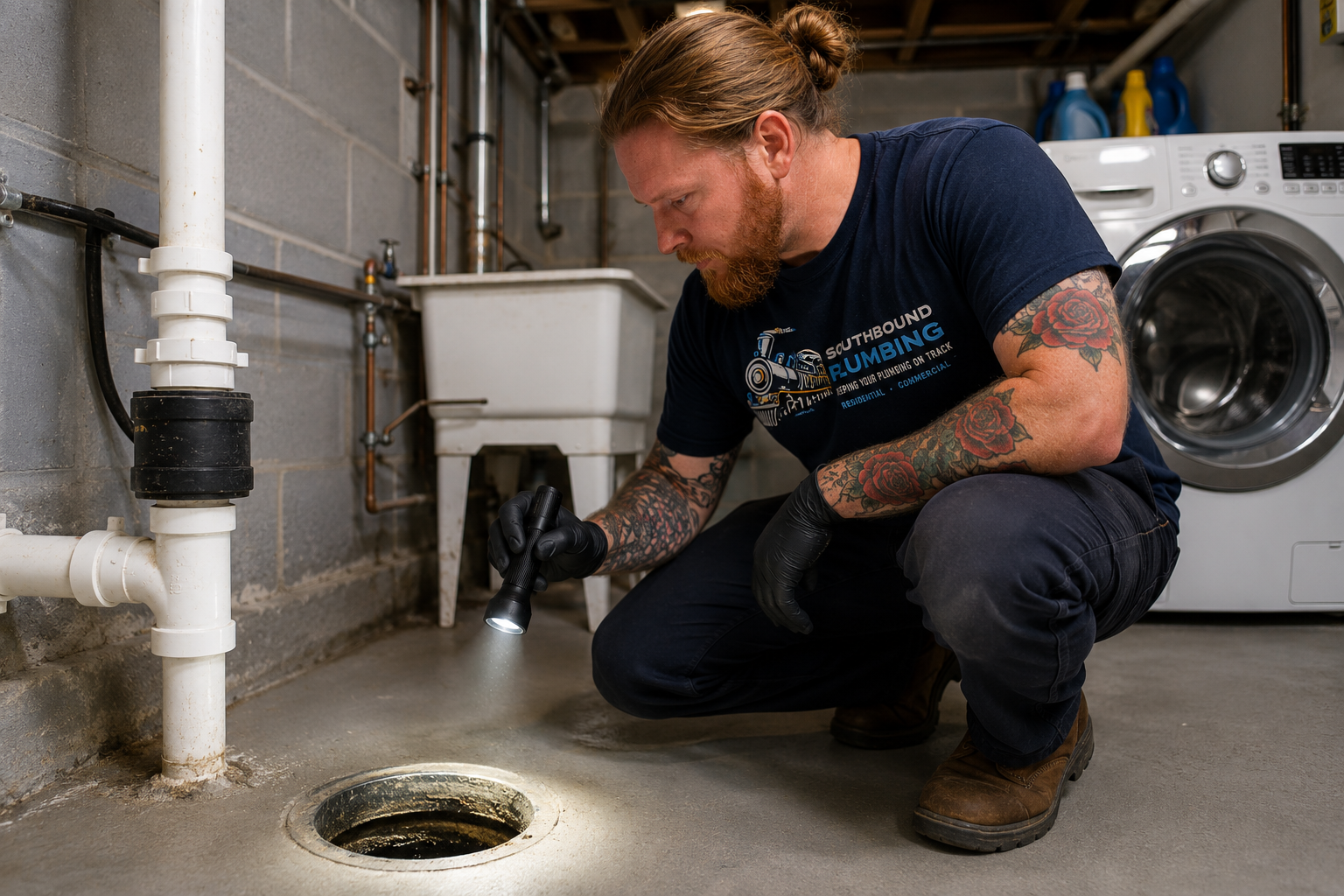
Older sewer lines, particularly the cast iron and clay pipe common in some of Huntsville’s established neighborhoods, develop small cracks and joint separations over the years. During normal weather, these gaps do not cause a noticeable problem. But during heavy rain, groundwater and surface water find their way into those cracks and add extra volume to a line that was never designed to carry it. That extra water pushes the system toward capacity faster, and it can back up into the lowest drains in your home, usually a basement floor drain or a ground-floor toilet.
Tree Root Intrusion
Tree roots are drawn toward the moisture and nutrients inside a sewer line, and they can work their way into small cracks or joints over time, eventually forming a partial or full blockage. On a dry day, a partial root blockage might only slow drainage slightly. But when heavy rain adds a large volume of water into the system all at once, that partial blockage becomes a bottleneck, and water backs up into the house rather than continuing to flow out.
If backups happen consistently during rain but the system seems to drain fine otherwise, root intrusion is one of the more likely explanations, especially in yards with mature trees near the sewer line’s path.
Municipal Line Capacity During Storms
Sometimes the problem is not on your property at all. Older municipal sewer systems, particularly combined or aging infrastructure, can become overwhelmed during heavy storms when stormwater and sewage share more capacity than intended. If neighbors are describing the same issue during the same storm, that is a strong signal the cause is on the city side rather than isolated to your line.
What to Do the Moment You Notice a Backup
If you notice water or sewage backing up into a drain or toilet during heavy rain, stop using water in the house immediately. Every flush, load of laundry, or dishwasher cycle adds more volume to a system that is already struggling to keep up. Avoid the instinct to keep flushing to try to clear it. Once things have calmed down, a camera inspection is the most reliable way to determine the actual cause.
Frequently Asked Questions About Sewer Backup
Is sewer backup damage typically covered by homeowner’s insurance?
Coverage varies significantly by policy, and many standard policies do not include sewer backup coverage unless it was added as an endorsement. It is worth reviewing your specific policy or checking with your provider directly rather than assuming either way.
How can I tell if the backup is my responsibility or the city’s?
Generally, the homeowner is responsible for the lateral line running from the house to the municipal connection, while the city is responsible for the main line. A camera inspection can usually pinpoint where the issue is located, which helps determine which side of that line it falls on.
Is it safe to use bleach or a chemical drain cleaner on a backup like this?
This is generally not recommended, particularly for a backup that involves the main sewer line rather than a single fixture. Chemical cleaners are not designed for this type of blockage and can create safety issues without resolving the underlying cause, which is usually root intrusion or a structural pipe issue that needs to be physically addressed.
How often should a sewer line be inspected if this keeps happening?
For a line with a known history of root intrusion or an older pipe material, periodic camera inspections, roughly every couple of years, can catch developing problems before they cause a backup. A property with mature trees near the line or a history of recurring issues may benefit from checking sooner.
Bottom Line
A sewer backup tied to heavy rain is rarely random. Whether the cause turns out to be aging pipe, root intrusion, or a municipal capacity issue, a camera inspection takes the guesswork out of the situation and points toward the right fix rather than a repeat problem next storm.