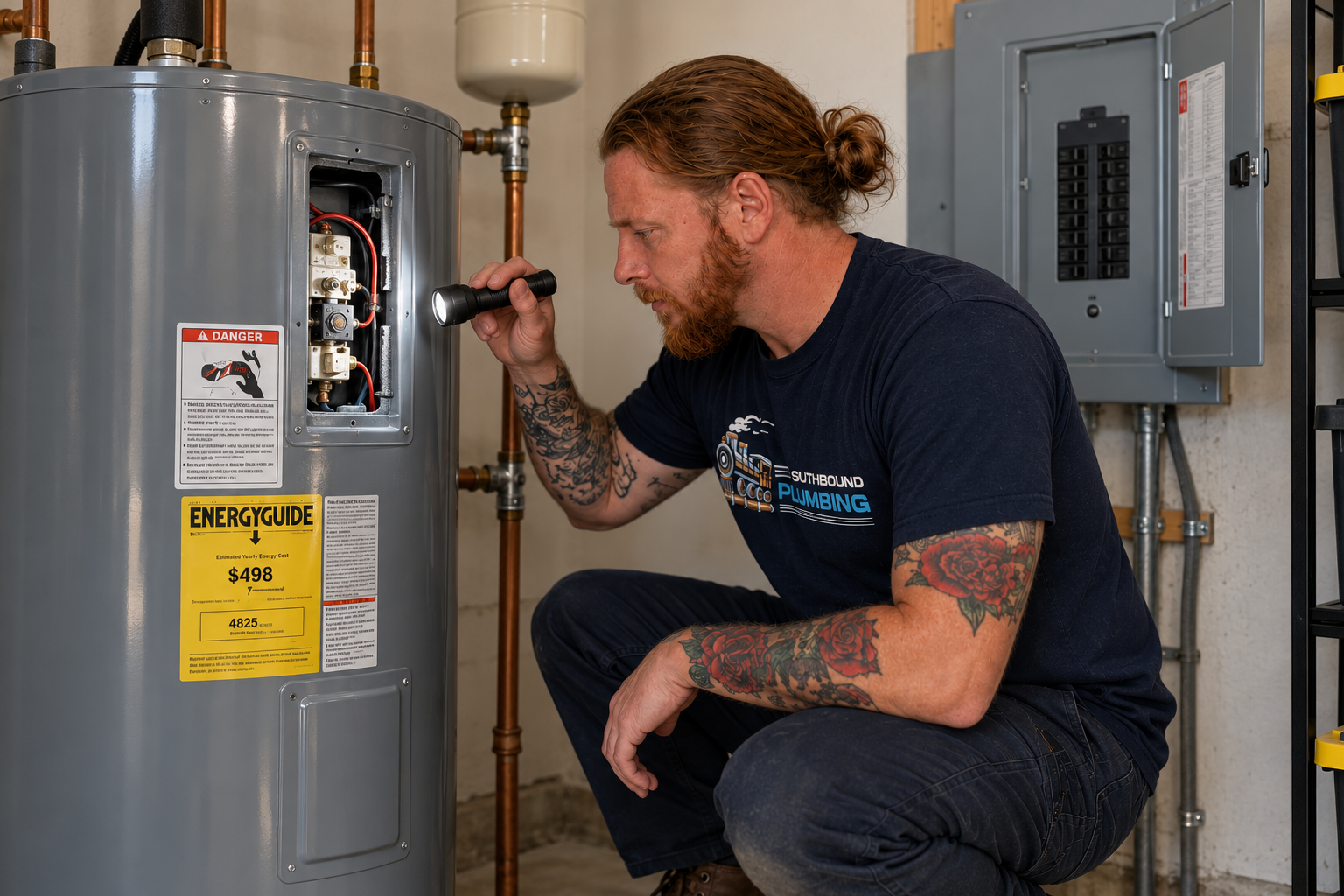
You walk into the garage, and there it is: a wet spot on top of the water heater, maybe a little rust, maybe a steady drip. Before you start pricing out a new one, take a breath. A water heater leaking from the top is usually leaking from a pipe connection, a valve, or a fitting, not the tank itself. That’s good news, because those parts can usually be repaired.
Let’s walk through it the same way we would if we were standing in your garage with you, one spot at a time, starting with the pipes.
Why a Leak on Top Is Usually Good News
When water shows up at the bottom of a heater, people tend to fear the worst, and sometimes they’re right. Once the steel tank rusts through, there’s no patching it. But the top of the tank is a different story. Everything up there is a connection or a part that can be tightened, rebuilt, or replaced without touching the tank.
Here’s a quick tip before you go hunting: dry the whole top of the heater with a towel, then watch it for a few minutes. Water likes to travel along pipes and insulation, so where you see it first isn’t always where it’s coming from.
Where Water Heater Leaks on Top Usually Come From
The pipes going in and out
Every tank heater has two pipes on top, one bringing cold water in and one sending hot water out. They screw into the tank with short fittings, and in a lot of homes there’s a special connector in between called a dielectric union. Its whole job is to keep the steel tank and copper pipes from corroding each other. Over the years, it loses that fight.
Look for white or green crust, rust stains, or a little bead of water sitting where the pipe meets the tank. Sometimes a connection just needs snugging up. If it’s corroded, the fitting needs to be replaced, which means shutting the water off and draining the tank down a bit first.
The relief valve
See that brass valve on the top or upper side of the tank with a pipe running down toward the floor? That’s the temperature and pressure relief valve, or T&P valve for short. If the water inside ever gets too hot or the pressure climbs too high, this valve opens and lets some out. It’s the most important safety part on your water heater, and we’ll come back to it in a minute.
The anode rod
Most tanks also have a hex-shaped plug on top. Underneath it is the anode rod, a metal rod that slowly corrodes so your tank doesn’t. The threads around that plug can start seeping, especially on older heaters, and you’ll usually see rust or mineral crust around it.
Condensation on gas heaters
If you have a gas water heater, the leak might not be a leak at all. When the tank fills with cold water, moisture from the burner can condense inside the vent pipe and drip back down, sometimes with a little sizzle. It tends to show up more in fall and winter and usually fades once the water warms up. If it never stops, though, or water is dripping steadily from the vent hood on top, give us a call.
Water Heater Pressure Relief Valve Leaking? Here’s What That Means
A dripping T&P valve is trying to tell you something. Either the valve itself has worn out, or it’s doing its job because something inside the tank isn’t right. The usual suspects:
- Water pressure coming into your home is running higher than it should
- Hot water is expanding with nowhere to go, which happens when a valve on your main line keeps it from backing into the city supply
- The temperature on the heater is turned up too high
- The valve is simply old or crusted with minerals
That expansion issue is more common than most people realize. If your home has a pressure reducing valve on the main line but no small expansion tank near the water heater, that combination is often behind a relief valve that drips on and off.
One thing we’ll say plainly: never cap, plug, or tie off a leaking relief valve, even if the drip is driving you crazy. It’s the one thing keeping an overheated tank from becoming a real danger. If it’s letting out a steady stream of hot water, turn off the power (electric) or set the gas control to “pilot” (gas), close the cold water valve on top of the tank, and call us.
When a Leak on Top Can’t Wait
A slow drip at a pipe fitting can usually wait a day or two. These can’t:
- Hot water spraying or pouring out of the relief valve pipe
- A leak that doesn’t slow down after you close the cold water valve
- Water getting near the wiring on an electric heater
- Any smell of gas around the heater
If you’re seeing any of those, call our 24/7 emergency plumber service. We answer day and night.
Repair or Replace Your Water Heater?
If your heater is otherwise in decent shape, a leak on top is a repair in most cases. It gets to be more of a conversation when the tank is getting up there in years, when corrosion has spread across the whole top, or when the leak is showing up alongside other trouble like popping sounds, rusty water, or hot water that runs out fast. In those cases, we’ll tell you straight whether a repair is worth it or just buying a little time. And if you’ve lost hot water along with the leak, our guide to no hot water in gas and electric water heaters can help you figure out what else is going on.
Either way, our water heater repair and replacement service covers gas and electric tanks, and you’ll get a flat-rate quote before we start.
Local Water Heater Help in Hampton Cove and Huntsville
We’re based right here in Hampton Cove, on the east side of Monte Sano. So if you live in Hampton Cove, Owens Cross Roads, or Big Cove, you’re not waiting on a truck to come over the mountain from the west side of town. A licensed Alabama master plumber handles every water heater call, and the estimate is free.
Frequently Asked Questions
Is a water heater leaking from the top dangerous?
Usually not right away. Most leaks on top come from a pipe fitting or the anode rod plug. The exception is a relief valve letting out a lot of hot water. Treat that one as urgent.
Can I still use my water heater if it’s leaking from the top?
For a slow drip at a fitting, usually yes for a short while. Set a pan or towel underneath and get it looked at soon, since even a small leak will rust the tank and nearby fittings over time.
Why is my water heater pressure relief valve leaking?
Most often it’s high water pressure, expanding hot water with nowhere to go, a temperature set too high, or a worn-out valve. A plumber can check your pressure and pin down which one.
Can I replace the relief valve myself?
We don’t recommend it. It’s a safety part, it has to match your heater’s rating, and the drain pipe has to be installed the right way.
Does a leak on top mean I need a new water heater?
In most cases, no. Leaks on top are usually fittings or valves, and those can be fixed. It’s a leak from the tank itself that usually means it’s time to replace.
Found Water on Top of Your Water Heater?
Give us a call. You’ll talk to a real person, and in most cases a licensed master plumber can be out the same day to find the leak and give you a price before any work starts.
Call (256) 269-2564 or request a free estimate online.